
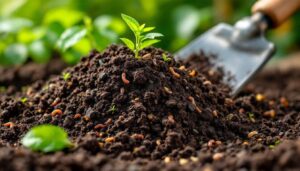



Gardeners and agricultural professionals have long observed a curious phenomenon: seedlings exposed to controlled frost conditions often display remarkable vigour and resilience compared to their sheltered counterparts. This counterintuitive reality challenges conventional wisdom about plant protection and reveals sophisticated cultivation strategies that commercial growers have refined over decades. The science behind frost-hardened seedlings demonstrates how strategic exposure to cold temperatures can trigger biological mechanisms that strengthen plants at the cellular level, producing specimens better equipped to withstand environmental stresses throughout their lifecycle.
The secrets of frost-resistant seedlings
Cellular adaptations triggered by cold exposure
When seedlings experience controlled frost conditions, their cells undergo remarkable transformations that enhance survival capabilities. The plant tissues respond by producing specialized proteins called cryoprotectants, which prevent ice crystal formation within cell walls. These molecular guardians work alongside increased sugar concentrations in cellular fluid, effectively lowering the freezing point and protecting delicate structures from rupture.
Professional growers understand that this hardening process must occur gradually. Sudden temperature drops can shock young plants, causing irreversible damage. The key lies in progressive exposure:
- Initial exposure to temperatures between 5°C and 10°C for several days
- Gradual reduction to near-freezing conditions over a fortnight
- Monitored periods at -2°C to -5°C for hardy species
- Careful observation of leaf colour and turgor pressure
The role of membrane restructuring
Cold temperatures prompt seedlings to modify their cell membrane composition, increasing the proportion of unsaturated fatty acids. This adjustment maintains membrane fluidity at lower temperatures, ensuring that essential transport processes continue functioning. Professional nurseries exploit this adaptation by timing their frost exposure to coincide with critical developmental stages, producing seedlings with permanently enhanced cold tolerance.
These physiological changes establish a foundation for understanding how environmental factors shape plant development more broadly.
The influence of climate on seedling growth
Temperature fluctuations as developmental signals
Climate patterns provide crucial information that seedlings use to regulate growth timing. Vernalization, the process whereby cold exposure triggers flowering mechanisms, demonstrates how plants integrate temperature data into their developmental programmes. Many species require specific cold periods before they can transition to reproductive phases, a requirement that professional growers manipulate to control flowering schedules.
| Climate Factor | Impact on Seedlings | Professional Response |
|---|---|---|
| Frost frequency | Triggers hardening responses | Controlled cold frames |
| Day length variation | Regulates growth hormones | Supplemental lighting |
| Humidity levels | Affects transpiration rates | Misting systems |
| Wind exposure | Strengthens stem structure | Ventilation protocols |
Regional adaptation strategies
Commercial operations in different climate zones have developed distinct approaches to seedling cultivation. Northern nurseries embrace frost exposure as an integral part of their production cycle, whilst southern facilities may artificially create cold periods to achieve similar hardening effects. This geographical variation in technique reveals the depth of professional knowledge accumulated through generations of practical experience.
Understanding these climate-driven approaches leads naturally to examining the specific methods professionals employ.
Expert techniques: the know-how of the pros
Timing and temperature precision
Professional growers employ sophisticated monitoring systems to track microclimatic conditions within their propagation areas. Digital sensors record temperature fluctuations at soil level, canopy height, and ambient air, providing data that informs precise adjustments to heating, ventilation, and protection systems. This level of control allows them to expose seedlings to beneficial frost conditions whilst avoiding damaging extremes.
The professional protocol typically involves:
- Pre-hardening assessment of seedling maturity and health status
- Gradual temperature reduction schedules tailored to species requirements
- Monitoring of soil moisture levels to prevent desiccation stress
- Strategic timing of cold exposure relative to transplanting schedules
- Post-hardening recovery periods with optimal growing conditions
Infrastructure and equipment considerations
Commercial nurseries invest in specialized infrastructure designed to facilitate controlled frost exposure. Cold frames with adjustable ventilation allow precise temperature management, whilst automated systems can respond to weather changes without human intervention. These facilities represent significant capital investment, justified by the superior quality of frost-hardened seedlings and reduced losses during field establishment.
Beyond merely surviving cold conditions, seedlings actually derive specific advantages from frost exposure.
The unexpected benefits of frost for plants
Enhanced stress tolerance across multiple domains
Research demonstrates that frost-hardened seedlings exhibit improved resistance not only to cold but to various environmental stresses. Plants that have undergone cold acclimation show greater drought tolerance, improved disease resistance, and better recovery from transplant shock. This cross-tolerance occurs because many stress response pathways share common genetic and biochemical components.
Improved root development characteristics
Frost exposure influences below-ground development in ways that benefit long-term plant establishment. Cold-hardened seedlings typically develop more extensive root systems with greater branching density. This enhanced root architecture improves nutrient acquisition efficiency and provides better anchorage, reducing establishment failures in field conditions. Professional growers recognize these benefits translate directly into higher survival rates and faster crop maturation.
These individual plant benefits scale up to create significant implications for agricultural systems.
How frost can transform agriculture
Extended growing seasons and geographical expansion
Frost-resistant seedlings enable cultivation in regions previously considered marginal for certain crops. By deploying cold-hardy transplants, farmers can establish crops earlier in spring and extend production later into autumn, effectively lengthening the productive season. This capability becomes increasingly valuable as agricultural operations seek to maximize land utilization and respond to market demands for extended fresh produce availability.
Reduced input requirements and environmental impact
Hardened seedlings require less protective infrastructure and reduced heating inputs during establishment phases. This translates to lower energy consumption and decreased reliance on plastic coverings and other materials. The environmental benefits extend beyond resource conservation: stronger, healthier plants often require fewer pesticide applications and demonstrate better nutrient use efficiency, contributing to more sustainable production systems.
Recognition of these advantages has sparked broader interest in cold-adapted cultivation approaches.
Trend: the growing adoption of cold-resistant seedlings
Market demand and commercial availability
Nurseries increasingly market frost-hardened seedlings as premium products, commanding higher prices that reflect their superior performance characteristics. Both commercial growers and home gardeners show willingness to pay premiums for plants that establish more reliably and require less intervention. This market shift encourages further refinement of hardening techniques and expansion of species offerings.
Educational initiatives and knowledge transfer
Agricultural extension services and horticultural organizations now incorporate frost-hardening principles into their training programmes. Workshops and demonstration projects showcase the techniques professionals use, making this specialized knowledge accessible to smaller-scale producers. This democratization of expertise represents a significant shift from traditional practices where such methods remained closely guarded trade secrets.
The convergence of scientific understanding, practical experience, and market forces positions frost-hardening as a mainstream cultivation strategy rather than a specialized technique. As climate variability increases, the resilience conferred by proper cold exposure becomes not merely advantageous but essential for reliable crop establishment. Professional growers have long understood what research now confirms: strategic frost exposure produces seedlings fundamentally better equipped to thrive in challenging conditions, offering benefits that extend throughout the plant lifecycle and across entire agricultural systems.