
Gardeners are constantly searching for innovative methods to nurture their plants whilst minimising environmental impact. Among the most ingenious techniques currently circulating within horticultural circles, one stands out for its simplicity and effectiveness: the humble toilet paper roll. This biodegradable cylinder, often discarded without a second thought, has emerged as a remarkable tool for cultivating robust seedlings. By repurposing this everyday item, green-fingered enthusiasts can create an ideal growing environment that promotes healthy root development and reduces transplant shock, all whilst contributing to waste reduction.
The paper roll: a gardener’s secret revealed
Understanding the cardboard cylinder method
The toilet paper roll technique represents a sustainable approach to seed starting that transforms waste into a valuable gardening resource. This method involves utilising empty cardboard tubes as individual containers for germinating seeds and nurturing young plants during their initial growth phase. The beauty of this approach lies in its dual functionality: the roll serves as both a protective vessel for delicate seedlings and a biodegradable material that integrates seamlessly into the soil ecosystem.
Why experienced gardeners embrace this method
Seasoned horticulturists have discovered numerous benefits associated with cardboard roll cultivation. The primary advantages include:
- Cost-effectiveness compared to purchasing plastic seed trays or peat pots
- Reduction of household waste through creative repurposing
- Elimination of transplant shock thanks to the biodegradable nature of cardboard
- Enhanced root development due to the porous structure of paper fibres
- Simplified organisation allowing for systematic planting arrangements
These compelling reasons explain why this technique has gained considerable traction among gardening communities seeking environmentally conscious alternatives to conventional methods.
Understanding the mechanics behind this ingenious method reveals why it produces such impressive results.
How this technique works on your plants
The science behind cardboard decomposition
Cardboard toilet rolls consist of cellulose fibres that gradually break down when exposed to moisture and soil microorganisms. This natural decomposition process creates an environment where plant roots can penetrate the material without encountering barriers. Unlike plastic containers that require removal before transplanting, cardboard rolls integrate directly into the growing medium, providing several physiological advantages for developing plants.
Root development and growth patterns
The porous nature of cardboard allows for optimal air circulation around the root zone, preventing the waterlogging that often occurs in non-permeable containers. As roots encounter the cardboard walls, they can either penetrate through or grow downwards, creating a robust root system. This process encourages:
- Vertical root growth rather than circular patterns associated with pot-bound plants
- Enhanced oxygen availability to root tissues
- Improved nutrient uptake capacity
- Stronger anchoring systems for mature plants
Moisture regulation properties
Cardboard possesses natural moisture-wicking capabilities that help regulate water distribution around seedlings. The material absorbs excess moisture whilst maintaining adequate hydration levels, reducing the risk of fungal diseases and root rot commonly associated with overwatering.
Beyond the functional mechanics, this approach offers numerous practical benefits for gardeners of all experience levels.
The advantages of cardboard paper in gardening
Environmental sustainability credentials
The ecological benefits of using toilet paper rolls extend far beyond simple waste reduction. By incorporating these materials into gardening practices, individuals contribute to a circular economy model where household items find new purpose rather than ending in landfills. The biodegradable nature ensures that no synthetic materials contaminate soil ecosystems.
Economic considerations for budget-conscious gardeners
Financial savings represent a significant advantage for those managing gardening expenses. A comparison of costs demonstrates the economic appeal:
| Container type | Cost per unit | Reusability | Environmental impact |
|---|---|---|---|
| Toilet paper rolls | Free | Single use, biodegradable | Minimal |
| Plastic seed trays | £5-15 | Multiple seasons | Moderate to high |
| Peat pots | £0.20-0.50 | Single use | Low to moderate |
Convenience and practical benefits
The user-friendly nature of this method appeals to novice and experienced gardeners alike. Toilet paper rolls require minimal preparation, occupy little storage space, and eliminate the need for specialised equipment. Their uniform size facilitates organised planting schemes and simplifies record-keeping for multiple plant varieties.
Implementing this technique requires following specific steps to maximise success rates.
Steps to achieve this eco-friendly trick
Preparation and materials gathering
Before commencing, assemble the necessary components for this sustainable planting method. Required materials include:
- Empty toilet paper rolls in sufficient quantity for your planting needs
- High-quality potting compost suitable for seed starting
- Seeds of chosen plant varieties
- A shallow tray or waterproof container to hold the rolls upright
- Water for initial moistening and ongoing maintenance
Setting up your cardboard containers
Position the toilet paper rolls vertically within your chosen tray, ensuring they stand securely without tipping. For added stability, some gardeners prefer making four small cuts at one end of each roll and folding the resulting flaps inward to create a base. This modification prevents soil from falling through whilst maintaining biodegradability.
Filling and planting procedure
Fill each cardboard cylinder with moistened potting compost, leaving approximately one centimetre of space at the top. Gently firm the soil to eliminate air pockets without compacting excessively. Plant seeds according to their specific depth requirements, typically indicated on seed packets. Label each roll to track different varieties.
Watering and maintenance protocols
Water the planted rolls carefully using a fine spray or bottom-watering method to avoid disturbing seeds. Maintain consistent moisture levels without saturating the cardboard, as excessive wetness may cause premature decomposition. Place the tray in appropriate lighting conditions based on plant requirements.
Transplanting into final positions
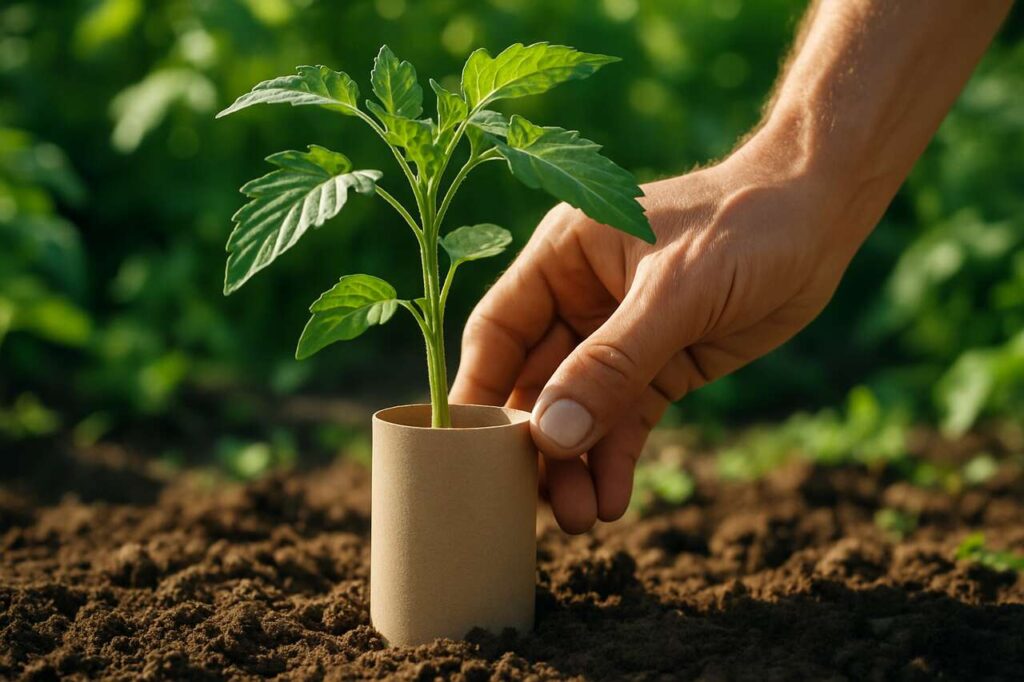
When seedlings develop true leaves and weather conditions permit outdoor planting, prepare holes in your garden beds. Plant the entire cardboard roll directly into the soil, ensuring the rim sits slightly below ground level to prevent moisture wicking. The cardboard decomposes naturally, allowing roots to expand freely.
The structural advantages provided by this method become evident as plants mature.
Stronger plants thanks to this hack
Reduced transplant shock phenomena
Traditional transplanting often damages delicate root systems, causing stress that manifests as wilting, stunted growth, or delayed establishment. The cardboard roll method eliminates this trauma by allowing roots to remain undisturbed during relocation. Plants continue growing without interruption, maintaining vigour throughout the transition.
Enhanced structural integrity
Seedlings cultivated using this technique develop more robust stem structures compared to those grown in conventional containers. The slightly restrictive environment encourages compact, sturdy growth rather than leggy, weak stems. This phenomenon results from:
- Controlled root space promoting proportional above-ground development
- Improved air circulation preventing damping-off diseases
- Optimal moisture levels supporting cellular strength
Long-term performance benefits
Plants established through cardboard roll cultivation demonstrate superior resilience to environmental stresses including drought, wind, and pest pressure. Their well-developed root systems enable efficient resource acquisition, supporting sustained growth and productivity throughout the growing season.
Complementary practices can further enhance gardening success when combined with this innovative approach.
Taking care of your garden: additional tips and tricks
Companion planting strategies
Maximise garden productivity by implementing companion planting principles alongside your cardboard-started seedlings. Certain plant combinations provide mutual benefits including pest deterrence, improved pollination, and enhanced nutrient availability.
Soil health maintenance
Healthy soil forms the foundation of successful gardening. Regular additions of organic matter such as compost or well-rotted manure improve structure, fertility, and microbial activity. These amendments work synergistically with biodegradable planting materials to create thriving growing conditions.
Sustainable waste reduction practices
Extend the cardboard concept to other household items suitable for gardening applications:
- Egg cartons for starting small seeds
- Newspaper pots fashioned using simple folding techniques
- Compostable food containers as temporary plant shields
Seasonal planning considerations
Optimise planting schedules by starting seeds indoors during late winter, allowing sufficient development time before outdoor transplanting. This approach extends growing seasons and increases harvest yields, particularly for warm-season crops requiring early establishment.
The toilet paper roll method represents a practical convergence of sustainability, economy, and horticultural effectiveness. By transforming everyday waste into valuable gardening tools, this technique addresses multiple challenges facing modern gardeners. The biodegradable nature eliminates transplant shock, promotes robust root development, and reduces environmental impact. Combined with complementary sustainable practices, this approach enables gardeners to cultivate healthier plants whilst minimising resource consumption. Whether managing a modest windowsill collection or an extensive outdoor plot, this simple yet ingenious hack offers tangible benefits that enhance both plant performance and environmental stewardship.