



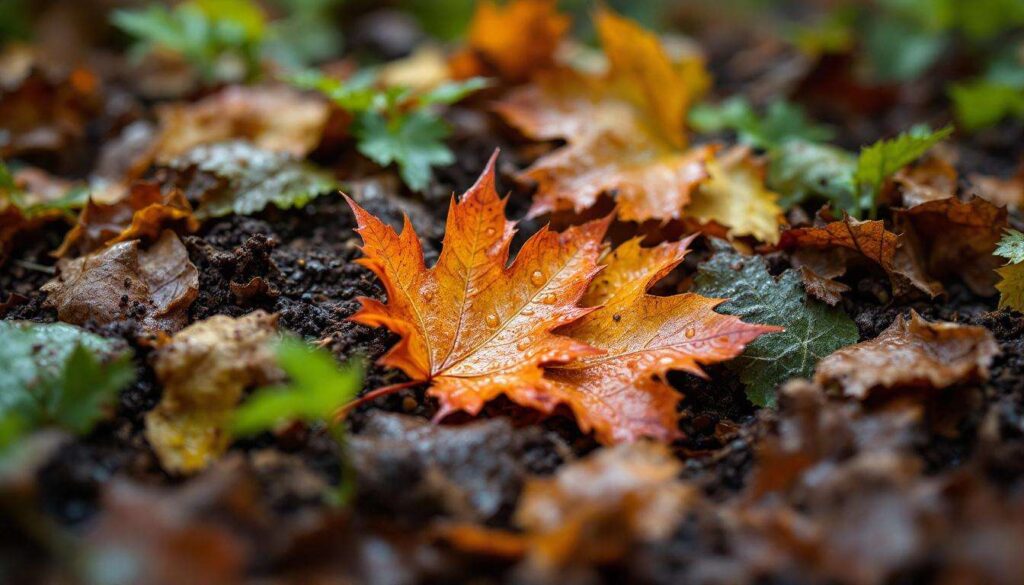
Autumn gardeners often face the same dilemma when fallen leaves blanket their lawns and borders: should these sodden masses go straight into the compost bin, or do they require special treatment ? Wet leaves are a contentious topic amongst composting enthusiasts, with opinions divided on whether their moisture content helps or hinders the decomposition process. Understanding what happens when wet leaves enter your compost heap can transform your approach to autumn garden waste and improve the quality of your finished compost. The truth is that wet leaves, when managed correctly, can become one of your most valuable composting ingredients rather than a problematic addition.
Understanding the role of wet leaves in compost
The composition of wet leaves
Wet leaves are classified as brown material in composting terminology, meaning they provide carbon rather than nitrogen. Even when saturated with water, leaves retain their fundamental chemical structure, which includes cellulose, lignin, and various trace minerals. The moisture content doesn’t alter their carbon-rich nature, though it does affect how quickly microorganisms can access and break down these compounds. Fallen leaves typically contain between 40 and 60 per cent carbon, making them an essential counterbalance to nitrogen-rich green materials like grass clippings and kitchen scraps.
Why leaves arrive wet
Leaves become waterlogged through various natural processes:
- Autumn rainfall and morning dew settling on fallen foliage
- Leaves lying on damp ground absorbing moisture from below
- Condensation forming on leaf piles during temperature fluctuations
- Snow melt saturating accumulated leaf litter
This natural moisture can actually work to your advantage when incorporated thoughtfully into your composting system, though the key lies in understanding the balance required for optimal decomposition.
The carbon-to-nitrogen relationship
Successful composting depends on maintaining an appropriate ratio of carbon to nitrogen, ideally around 30:1 for efficient decomposition. Wet leaves contribute primarily to the carbon side of this equation, and their moisture content doesn’t diminish their value as a carbon source. However, the water they carry does affect the overall moisture level of your compost heap, which must be carefully monitored to ensure aerobic decomposition continues effectively.
Understanding these fundamental properties of wet leaves sets the stage for appreciating how their moisture content specifically influences the composting environment.
The benefits of wet leaves for compost moisture
Achieving optimal moisture levels
A healthy compost heap requires moisture content of approximately 40 to 60 per cent, often described as having the dampness of a wrung-out sponge. Wet leaves can help achieve this ideal state, particularly when your compost pile contains an abundance of dry materials. The water clinging to leaf surfaces distributes moisture throughout the heap as the leaves settle and compact, creating pockets of humidity that support microbial activity. This is especially valuable during dry autumn periods when your compost might otherwise require manual watering.
Preventing excessive dryness
Dry compost heaps decompose slowly because microorganisms require moisture to function effectively. Adding wet leaves to a pile dominated by dry brown materials like shredded paper, cardboard, or woody prunings introduces necessary hydration without the need for additional watering. The leaves act as natural moisture reservoirs, gradually releasing water as decomposition progresses and preventing the desiccation that can halt composting activity altogether.
Moisture distribution advantages
| Material type | Moisture distribution | Composting benefit |
|---|---|---|
| Dry leaves | Uneven, requires watering | Slower initial decomposition |
| Wet leaves | Even, self-moistening | Faster microbial colonisation |
| Soaked leaves | Excessive, causes compaction | Anaerobic conditions possible |
The moisture that wet leaves provide creates an environment where beneficial bacteria and fungi can thrive, which naturally leads to questions about how this affects the speed and quality of decomposition.
How wet leaves affect decomposition
Microbial activity and moisture
Decomposition is fundamentally a biological process driven by countless microorganisms that require water to survive and reproduce. Wet leaves provide an immediately hospitable environment for these decomposers, allowing bacterial colonies to establish themselves more quickly than they would on dry material. The moisture facilitates the movement of nutrients and enzymes, enabling microbes to break down the tough cellulose and lignin structures that form leaf tissue.
Temperature generation in wet conditions
As microorganisms consume organic matter, they generate heat as a metabolic by-product. Wet leaves, when properly balanced with nitrogen sources, can help a compost heap reach temperatures between 55 and 65 degrees Celsius, the optimal range for hot composting. This heat accelerates decomposition and kills weed seeds and pathogens. However, if leaves are too wet, they can create cold, anaerobic pockets that slow decomposition and produce unpleasant odours.
The timeline of leaf breakdown
Under optimal conditions with appropriate moisture levels, wet leaves typically decompose according to this timeline:
- First two weeks: initial microbial colonisation and softening of leaf structure
- One to three months: visible breakdown of leaf material into fragments
- Three to six months: transformation into dark, crumbly compost
- Six to twelve months: complete integration into finished compost
These timescales vary depending on leaf type, with oak and beech leaves taking longer due to higher tannin content, whilst softer leaves like maple and ash decompose more rapidly. The moisture content influences these rates significantly, making proper management techniques essential.
Techniques for effectively using wet leaves
Layering wet leaves with green materials
The most effective technique for using wet leaves involves creating alternating layers with nitrogen-rich green materials. Add a layer of wet leaves approximately 15 to 20 centimetres thick, then top with a 5 to 10 centimetre layer of grass clippings, vegetable peelings, or other green waste. This lasagne method ensures proper carbon-to-nitrogen ratios whilst allowing the moisture from leaves to permeate throughout the heap without creating waterlogged zones.
Shredding for faster decomposition
Shredding or chopping wet leaves before adding them to your compost dramatically accelerates decomposition by increasing surface area available to microorganisms. A lawn mower can effectively shred wet leaves, though they may clump together more than dry leaves. The smaller pieces also integrate more easily with other compost materials, preventing the formation of impermeable mats that can block air circulation.
Monitoring and adjusting moisture
Regular monitoring ensures wet leaves contribute positively to your compost. Perform the squeeze test by grabbing a handful of compost material: if water drips out, the mixture is too wet and requires dry brown material; if it won’t hold together, it needs more moisture. When adding wet leaves, assess your existing heap’s moisture level first and adjust the quantity accordingly.
Creating dedicated leaf mould
Wet leaves can be composted separately to create leaf mould, a valuable soil conditioner. Simply pile wet leaves in a contained area or bag them, then leave them for twelve to eighteen months. This passive composting method requires no turning or additional materials, and the resulting leaf mould has excellent moisture-retention properties for garden beds.
Whilst these techniques maximise the benefits of wet leaves, certain problems can arise when moisture levels become excessive.
Potential issues with excess wet leaves
Anaerobic decomposition and odours
When wet leaves dominate a compost heap without sufficient dry material or aeration, they create anaerobic conditions where oxygen-dependent bacteria cannot survive. Anaerobic decomposition produces hydrogen sulphide and other compounds that create a distinctive rotten egg smell. This process is significantly slower than aerobic composting and produces a slimy, unpleasant end product rather than sweet-smelling, crumbly compost.
Compaction and drainage problems
Waterlogged leaves become heavy and compress under their own weight, forming dense layers that exclude air and prevent drainage. This compaction creates impermeable barriers within your compost heap, blocking the movement of oxygen and moisture to materials below. The resulting stratification means some areas decompose whilst others remain virtually unchanged, leading to inconsistent compost quality.
Pest attraction
Excessively wet compost conditions can attract unwanted visitors:
- Slugs and snails seeking damp refuges
- Fungus gnats breeding in waterlogged organic matter
- Rats and mice if the soggy conditions affect food waste decomposition
Nutrient leaching concerns
When compost becomes saturated, valuable nutrients can leach out with excess water, diminishing the nutritional value of your finished compost. Water-soluble compounds like nitrates and potassium wash away particularly easily, potentially polluting groundwater whilst robbing your compost of fertility. Proper drainage and moisture management prevent this wasteful loss of nutrients.
Recognising these potential problems helps gardeners implement preventative strategies that maintain compost health throughout the autumn season.
Tips for balanced composting with wet leaves
Stockpiling dry materials
Prepare for autumn’s wet leaf influx by stockpiling dry brown materials during summer months. Save shredded paper, cardboard, straw, and dry plant stems in a covered area where they remain moisture-free. When wet leaves arrive, you’ll have ample dry material to create properly balanced layers and absorb excess moisture immediately.
Turning frequency adjustments
Compost containing wet leaves benefits from more frequent turning than drier mixtures. Aim to turn your heap every five to seven days during the first month after adding significant quantities of wet leaves. This aeration prevents compaction, distributes moisture evenly, and ensures all material receives exposure to the active composting zone in the heap’s centre.
Adding structural materials
Incorporate coarse materials that create air channels within wet leaf layers:
- Small twigs and pruned branches
- Scrunched cardboard pieces
- Straw or hay
- Wood chips or shredded bark
These structural elements prevent complete compaction whilst maintaining the carbon-rich nature of your brown material layers.
Using compost activators
Commercial compost activators or homemade alternatives like diluted urine can boost microbial activity in wet leaf piles. These nitrogen sources help balance the high carbon content of leaves whilst providing nutrients that accelerate decomposition. Apply activators in moderation, following product instructions or using a ratio of one part urine to ten parts water.
Covering strategies
| Cover type | Best use | Moisture management |
|---|---|---|
| Tarpaulin | Preventing additional rain | Maintains existing moisture |
| Breathable cover | Allowing air whilst shedding rain | Gradual moisture reduction |
| No cover | Dry climates only | Natural moisture balance |
Wet leaves needn’t be a composting challenge when approached with knowledge and appropriate techniques. Their moisture content, far from being purely problematic, can actively contribute to creating the ideal environment for decomposition when balanced with dry materials and proper aeration. The carbon-rich nature of leaves makes them invaluable for offsetting nitrogen-heavy kitchen and garden waste, whilst their natural moisture can eliminate the need for manual watering in many situations. Success lies in recognising that wet leaves require management rather than avoidance, using layering techniques, regular turning, and structural materials to prevent compaction and anaerobic conditions. By stockpiling dry materials in preparation for autumn’s leaf fall and monitoring moisture levels consistently, gardeners can transform potentially troublesome wet leaves into premium compost that enriches soil and supports healthy plant growth throughout the growing season.