

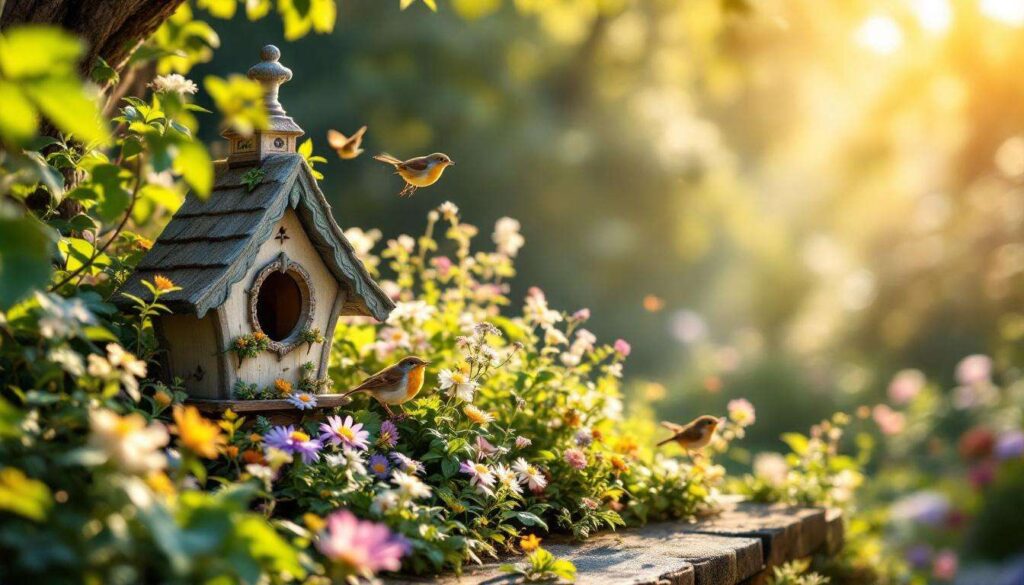
Gardens offer more than just visual appeal and fresh air. They serve as vital sanctuaries for wildlife, particularly small birds that bring life, colour, and melody to outdoor spaces. While many gardeners instinctively reach for traditional feeders, an increasingly popular alternative combines functionality with aesthetic charm: decorative bird baths and water features. These poetic objects not only attract feathered visitors but also enhance the garden’s ambiance in ways that conventional feeders cannot match.
Why Attract Small Birds to Your Garden ?
Ecological Benefits for Your Outdoor Space
Encouraging small birds to visit your garden creates a natural ecosystem balance that benefits plants and wildlife alike. Birds contribute significantly to pest control by consuming insects, caterpillars, and aphids that would otherwise damage vegetation. A single blue tit family, for example, can consume thousands of insects during the breeding season, protecting your garden from infestations without the need for chemical interventions.
Beyond pest management, birds also assist with pollination and seed dispersal. Species such as finches and sparrows inadvertently spread seeds whilst foraging, promoting biodiversity and helping native plants establish themselves in new areas. This natural cycle strengthens the garden’s resilience and reduces maintenance requirements.
The Therapeutic Value of Birdwatching
Observing birds offers considerable mental health benefits. Studies have demonstrated that regular exposure to birdsong and wildlife reduces stress levels, lowers blood pressure, and improves overall wellbeing. The simple act of watching robins bathe or sparrows socialise provides a meditative experience that connects people with nature, even in urban environments.
Understanding these advantages naturally leads to considering the most effective methods for attracting these beneficial visitors to your garden.
The Benefits of a Decorative and Poetic Object
Aesthetic Integration with Garden Design
Unlike utilitarian feeders that often appear as functional afterthoughts, decorative water features and bird baths serve as focal points that enhance garden design. These objects come in various styles, from classical stone basins to contemporary ceramic pieces, allowing seamless integration with existing landscaping themes. A well-chosen bird bath becomes a sculptural element that provides year-round visual interest, even during seasons when birds are less active.
The reflective quality of water adds another dimension to garden aesthetics. Light dancing on the surface creates movement and sparkle, whilst the gentle sound of trickling water from fountain-style features introduces an auditory element that transforms the garden atmosphere.
Meeting Essential Bird Needs
Water represents a critical resource for birds, particularly during hot summers and freezing winters when natural sources become scarce or inaccessible. Birds require water for two essential purposes:
- Drinking to maintain hydration and regulate body temperature
- Bathing to keep feathers in optimal condition for flight and insulation
- Cooling during extreme heat periods
A decorative water feature addresses these fundamental needs whilst offering something feeders cannot: a space for preening and socialising. Birds often gather at water sources in small groups, creating dynamic scenes of avian activity that provide endless entertainment for observers.
Attracting a Wider Variety of Species
Certain bird species show reluctance to visit feeders but readily approach water sources. Warblers, wagtails, and thrushes typically prefer foraging naturally but cannot resist a clean, accessible water supply. This means a decorative water feature can attract species that might otherwise never visit your garden, significantly increasing biodiversity.
Having established the advantages of these poetic objects, it becomes important to examine how they compare with more conventional approaches to attracting birds.
Comparison with Traditional Feeders
Practical Differences in Maintenance
Traditional feeders require regular refilling, especially during peak seasons when bird activity intensifies. Seed spillage creates mess beneath feeders, potentially attracting unwanted visitors such as rats or squirrels. Additionally, feeders demand frequent cleaning to prevent the spread of diseases like salmonellosis and trichomonosis, which can devastate local bird populations.
Water features, by contrast, require less frequent attention. A simple daily top-up during warm weather and regular cleaning every few weeks maintains hygiene standards. The following table illustrates the maintenance comparison:
| Maintenance Aspect | Traditional Feeder | Water Feature |
|---|---|---|
| Refilling frequency | Every 2-3 days | Every 3-5 days |
| Cleaning requirement | Weekly deep clean | Fortnightly scrub |
| Spillage issues | Significant seed mess | Minimal water splash |
| Pest attraction | High (rodents, squirrels) | Low to none |
Cost Considerations Over Time
Whilst the initial investment in a quality decorative water feature may exceed that of a basic feeder, the long-term economics favour water-based solutions. Birdseed represents an ongoing expense that accumulates considerably over months and years. Premium seed blends designed to attract specific species can prove particularly costly.
Water features eliminate this recurring expenditure entirely. The only costs involve occasional cleaning products and, for solar-powered fountain features, potential battery replacements. This makes them a financially sustainable choice for budget-conscious gardeners seeking to support wildlife.
Year-Round Functionality
Feeders typically see reduced usage during spring and summer when natural food sources abound. Water features, however, maintain their appeal throughout all seasons. During breeding season, parent birds visit frequently to drink and bathe. In autumn, migrating species stop to refresh themselves. Winter brings perhaps the greatest need, as frozen ponds and streams leave birds desperately seeking liquid water.
Understanding these comparative advantages helps inform decisions about placement, which significantly affects success rates.
Choosing the Right Place for Your Object
Safety and Visibility Considerations
Positioning a water feature requires balancing visibility for enjoyment with safety for visiting birds. Place the object where it can be observed from windows or seating areas, but ensure sufficient distance from dense shrubs where cats might lurk. A radius of approximately two to three metres of open space around the feature allows birds to detect approaching predators whilst remaining within quick flight distance of protective cover.
Height also matters considerably. Ground-level features attract ground-feeding species like blackbirds and dunnocks, whilst elevated baths appeal to robins and tits. Consider installing features at multiple heights to accommodate different species’ preferences and comfort levels.
Environmental Factors Affecting Success
Sunlight exposure influences both water quality and bird attraction. Partial shade prevents water from becoming too warm during summer whilst reducing algae growth that can quickly foul the feature. However, complete shade may deter birds, which prefer bathing in dappled sunlight where they can warm themselves afterwards.
Proximity to natural perches enhances appeal. Birds typically survey a water source from nearby branches before descending to drink or bathe. Positioning the feature within five to ten metres of trees or tall shrubs provides these essential observation posts whilst maintaining adequate open space for safety.
Optimal placement sets the foundation, but additional strategies can further enhance the feature’s effectiveness in attracting diverse species.
Tips to Maximise the Attraction of Small Birds
Water Depth and Surface Texture
Small birds prefer shallow water for bathing, typically no deeper than two to three centimetres at the edges. A gently sloping basin allows birds of different sizes to choose their preferred depth. Adding textured stones or pebbles to the bottom provides secure footing, particularly important for nervous first-time visitors.
The sound of moving water acts as a powerful attractant. Even a simple dripping mechanism or small solar-powered fountain significantly increases visitor numbers. Birds can hear trickling water from considerable distances and instinctively investigate the source.
Complementary Garden Features
Creating a bird-friendly environment extends beyond the water feature itself. Consider implementing these supporting elements:
- Native plants that produce berries and seeds for natural foraging
- Dense hedging or evergreen shrubs providing shelter and nesting sites
- Insect-friendly flowers ensuring abundant invertebrate prey
- Chemical-free gardening practices protecting birds from toxins
These complementary features transform your garden into a comprehensive habitat rather than merely a refreshment stop, encouraging birds to remain longer and visit more frequently.
Seasonal Adjustments for Optimal Results
Adapting your approach to seasonal conditions maximises year-round effectiveness. During summer months, ensure water levels remain adequate despite increased evaporation. Adding ice cubes during heatwaves provides additional cooling relief for overheated birds.
Winter presents unique challenges, as frozen water becomes useless to visiting birds. Placing a tennis ball in the water creates movement that delays freezing, whilst purpose-built heaters maintain ice-free conditions during severe cold snaps. These simple interventions can prove lifesaving for birds struggling through harsh weather.
Maintaining the feature’s condition ensures it continues providing these benefits over extended periods.
Maintenance and Durability of Your Poetic Object
Regular Cleaning Protocols
Establishing a consistent cleaning routine prevents disease transmission and keeps the feature attractive to birds. Empty and scrub the basin every two weeks using a stiff brush and diluted wildlife-safe disinfectant. Rinse thoroughly to remove all chemical residues before refilling. During periods of heavy use, particularly in warm weather, increase cleaning frequency to weekly intervals.
Watch for algae development, which appears as green slime on surfaces. Whilst small amounts pose no danger, excessive growth can deter birds and indicate water quality issues. Regular cleaning and partial shade positioning typically control algae without requiring chemical treatments.
Material Selection for Longevity
The feature’s construction material significantly affects durability and maintenance requirements. Stone and concrete options offer exceptional longevity, often lasting decades with minimal care. These materials withstand freeze-thaw cycles and develop attractive patinas over time, enhancing their decorative appeal.
Ceramic and glazed pottery provide beautiful aesthetics but require more careful handling. Ensure any ceramic piece is frost-resistant if left outdoors year-round, as non-frost-proof materials will crack during winter. Metal features, particularly copper or bronze, develop distinctive verdigris finishes that many gardeners find appealing, though they require occasional polishing if a bright appearance is preferred.
Addressing Common Issues
Leaks occasionally develop in older features, particularly at joints or cracks. Small fissures in stone or concrete can be sealed with pond-safe sealants available from garden centres. For more significant damage, professional repair or replacement may prove necessary to maintain functionality.
Mosquito breeding sometimes concerns gardeners, though this rarely becomes problematic with proper maintenance. Regular water changes every few days prevent larvae from completing their development cycle. Adding a small fountain or dripper creates surface movement that mosquitoes avoid for egg-laying.
Decorative water features represent an elegant solution for attracting small birds whilst enhancing garden aesthetics. They address fundamental avian needs more comprehensively than traditional feeders, require less maintenance, and provide year-round functionality. By selecting appropriate placement, implementing supportive habitat features, and maintaining regular cleaning routines, gardeners create welcoming sanctuaries that benefit both wildlife and human observers. The gentle presence of water, combined with thoughtful design, transforms outdoor spaces into vibrant ecosystems where nature and artistry harmoniously coexist.