

Homeowners constantly search for ways to reduce energy costs whilst creating environmentally friendly spaces. A surprisingly simple solution exists that combines thermal insulation with wildlife conservation, yet remains largely overlooked in mainstream gardening advice. Strategic planting near your home’s exterior walls creates a natural barrier against heat loss during winter months, whilst simultaneously providing essential habitat for local bird populations. This dual-purpose approach offers measurable benefits for both household budgets and ecological balance, requiring minimal investment compared to conventional insulation methods.
Introduction to the energy-efficient garden trick
The concept centres on strategic vegetation placement to form a protective layer between external temperatures and interior living spaces. Plants act as natural insulators, creating air pockets that buffer cold winds and reduce thermal transfer through walls. This technique, known as living insulation, has been documented in agricultural settings for centuries but rarely applied to residential properties.
How living barriers reduce energy consumption
Dense plantings positioned along north-facing walls intercept prevailing cold winds before they reach building surfaces. The vegetation layer traps air within its structure, creating a thermal buffer zone that significantly reduces heat loss. Studies from environmental building research indicate that well-planned green barriers can decrease wall surface temperatures by 3-5 degrees Celsius during winter months, translating to reduced heating requirements.
| Barrier type | Temperature reduction | Estimated heating savings |
|---|---|---|
| Dense evergreen hedge | 4-5°C | 12-15% |
| Mixed shrub border | 2-3°C | 7-10% |
| Climbing plants on trellis | 2-4°C | 8-12% |
Beyond temperature regulation, these plantings create microclimates that attract beneficial wildlife, establishing a garden that serves multiple functions simultaneously.
The effect of planting on indoor temperature
Vegetation influences building temperatures through several interconnected mechanisms that work throughout seasonal cycles. Understanding these processes enables homeowners to maximise thermal benefits whilst maintaining aesthetic garden design.
Winter insulation properties
Evergreen species provide year-round protection, maintaining their foliage structure during cold months when insulation proves most valuable. The dense branching patterns create multiple air layers that slow wind velocity and reduce convective heat loss from exterior walls. This natural windbreak effect proves particularly effective on exposed elevations where conventional fencing offers limited thermal protection.
Summer cooling advantages
The same plantings that conserve warmth during winter provide shading and evaporative cooling when temperatures rise. Deciduous plants lose leaves seasonally, allowing winter sunlight to reach walls whilst blocking intense summer radiation. Transpiration from leaf surfaces releases moisture into surrounding air, creating localised cooling that reduces air conditioning demands.
- Reduced solar gain through wall surfaces by 40-60%
- Lower ambient temperatures in immediate vicinity by 2-3°C
- Decreased reliance on mechanical cooling systems
- Extended lifespan of exterior building materials through temperature moderation
These thermal regulation properties create comfortable indoor environments whilst addressing the secondary benefit of supporting local ecosystems.
Attracting birds: a bonus for biodiversity
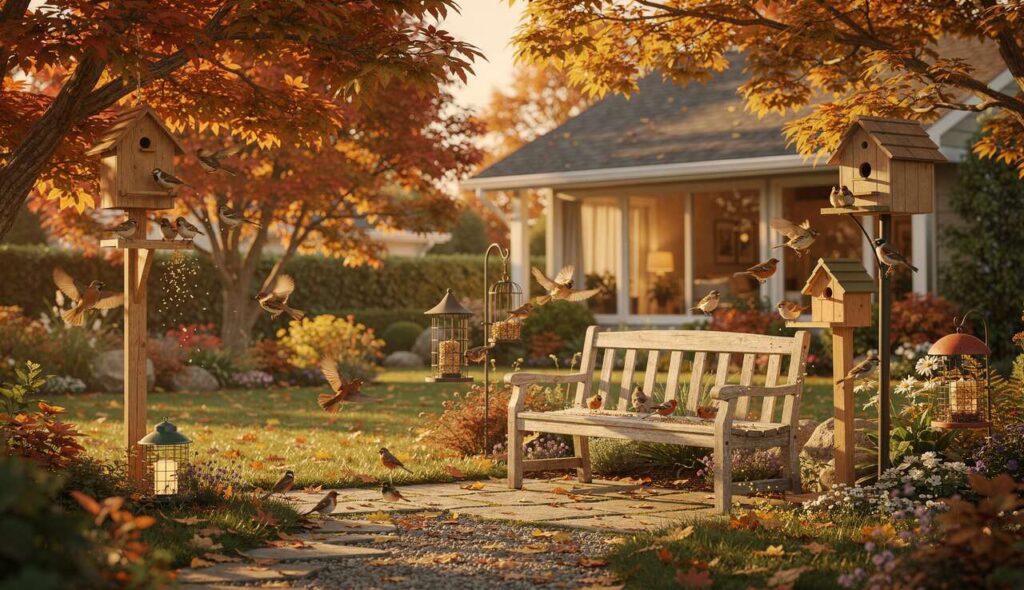
Dense plantings near buildings provide essential habitat structures that support diverse bird populations throughout the year. The layered vegetation offers nesting sites, shelter from predators, and foraging opportunities that prove increasingly scarce in developed areas.
Nesting and shelter benefits
Thick evergreen hedges create protected spaces where birds establish territories and raise young. The internal branching structure provides secure nest placement away from ground predators, whilst dense foliage conceals breeding activity from aerial threats. Species such as robins, blackbirds, and dunnocks readily colonise well-established shrub borders, contributing to natural pest control by consuming insects that might otherwise damage garden plants.
Food sources and foraging habitat
Strategic plant selection ensures year-round food availability through berries, seeds, and insects attracted to flowering species. Native plants prove particularly valuable, having evolved alongside local bird populations to provide nutritionally appropriate resources at critical times.
| Bird species | Preferred plants | Primary benefit |
|---|---|---|
| Blue tits | Hawthorn, holly | Insect foraging, winter berries |
| Goldfinches | Teasel, lavender | Seed production |
| Wrens | Ivy, pyracantha | Dense cover, nesting sites |
Establishing these wildlife corridors requires careful consideration of plant characteristics to maximise both thermal and ecological benefits.
Which types of plants to favour for maximum effect
Selecting appropriate species determines the success of this dual-purpose gardening approach. Plants must combine thermal efficiency characteristics with wildlife value whilst remaining suitable for local growing conditions.
Evergreen foundation species
These plants form the structural backbone of energy-efficient borders, maintaining density throughout winter months. Box, yew, and holly create impenetrable barriers when planted closely, whilst laurel and photinia offer rapid establishment with year-round foliage coverage. Native species generally require less maintenance and support broader wildlife communities than exotic alternatives.
Deciduous complementary plants
Incorporating deciduous shrubs provides seasonal variation whilst maintaining summer shading benefits. Hawthorn, blackthorn, and dogwood species offer spring flowers, autumn berries, and winter structural interest. Their seasonal leaf drop allows winter sunlight penetration whilst the bare branching still provides wind buffering.
- Hawthorn: dense thorny growth, excellent nesting habitat, abundant berry production
- Cotoneaster: evergreen varieties available, prolific berries, low maintenance requirements
- Pyracantha: year-round coverage, spectacular berry display, thorny protection for nesting birds
- Native ivy: climbs walls directly, provides winter flowering for late insects, dense cover
Climbing plants for vertical spaces
Where horizontal space proves limited, climbing species create vertical insulation layers against walls. Ivy establishes rapidly and requires no support structure, whilst clematis and honeysuckle provide seasonal flowers that attract pollinating insects. These vertical plantings prove particularly effective on exposed gable ends where wind exposure maximises heat loss.
Having selected appropriate species, proper placement determines how effectively these plants deliver thermal and ecological benefits.
How to correctly place your plants for optimal results
Strategic positioning maximises the insulating properties of garden plantings whilst creating functional wildlife corridors. Careful planning ensures plants achieve intended purposes without causing maintenance problems or structural issues.
Distance from building foundations
Plantings should sit 60-90 centimetres from walls to prevent moisture accumulation against building surfaces whilst maintaining thermal buffering effects. This spacing allows air circulation that prevents damp problems, accommodates root development without foundation interference, and provides maintenance access for wall inspections.
Orientation and exposure considerations
North and east-facing elevations benefit most from dense evergreen plantings that block cold winds. South-facing walls require deciduous species that permit winter solar gain whilst providing summer shading. West-facing aspects experience afternoon sun exposure, making them suitable for mixed plantings that balance seasonal requirements.
- North walls: maximum evergreen density for wind protection
- East walls: medium density plantings to buffer morning cold
- South walls: deciduous species for seasonal solar control
- West walls: mixed plantings for afternoon temperature moderation
Layering for maximum effectiveness
Creating graduated height layers increases both thermal and wildlife benefits. Tall background shrubs form the primary windbreak, mid-height species fill gaps and provide nesting habitat, whilst low groundcover plants complete the insulating barrier and offer foraging areas for ground-feeding birds. This structure mimics natural woodland edges that support the greatest biodiversity.
Establishing these plantings represents only the initial phase, as ongoing care ensures they continue delivering benefits throughout their lifespan.
Maintenance tips for an effective garden all year round
Regular attention maintains the thermal efficiency and wildlife value of strategic plantings. Appropriate maintenance techniques preserve density whilst encouraging healthy growth that maximises insulating properties.
Pruning for density and structure
Light annual trimming encourages bushy growth that increases thermal effectiveness. Prune evergreens in late spring after nesting season concludes, removing only outer growth to maintain dense interior branching. Avoid severe cutting that creates gaps in the protective barrier or removes berry-producing wood that feeds overwintering birds.
Seasonal care requirements
Autumn mulching around plant bases conserves soil moisture and moderates root zone temperatures, supporting vigorous growth that maintains barrier effectiveness. Spring feeding with balanced organic fertiliser promotes healthy foliage development essential for optimal insulation properties.
- Spring: apply organic fertiliser, check for winter damage, repair gaps in coverage
- Summer: water during extended dry periods, monitor pest issues
- Autumn: apply mulch layer, plant new specimens for gap filling
- Winter: avoid disturbing plantings to protect sheltering wildlife
Long-term management strategies
Mature plantings require periodic renovation to maintain vigour and density. Remove dead or diseased wood promptly, thin overcrowded sections to improve air circulation, and replace declining specimens before gaps compromise thermal efficiency. Well-maintained borders continue delivering benefits for decades whilst requiring progressively less intervention as plants establish fully.
This gardening approach demonstrates how thoughtful plant selection and placement creates spaces that simultaneously reduce energy consumption and support local wildlife. The thermal insulation provided by strategic vegetation delivers measurable heating cost reductions, whilst dense plantings offer essential habitat for bird populations facing increasing pressure from habitat loss. Implementing these techniques requires modest initial investment and maintenance commitment, yet provides ongoing benefits that compound over time as plants mature and wildlife populations establish. Homeowners seeking sustainable solutions to rising energy costs whilst contributing positively to local ecosystems will find this method offers practical advantages that extend well beyond conventional gardening approaches.