


Every year, countless households discard mountains of organic material following celebrations, unaware that these remnants hold extraordinary potential for their gardens. From wilted flower arrangements to vegetable peelings and paper decorations, party waste represents a largely untapped resource that gardening experts increasingly refer to as “green gold.” This overlooked treasure can transform ordinary soil into nutrient-rich growing medium, reducing landfill contributions whilst simultaneously enhancing garden health.
Understanding the concept of “Green Gold”
What makes party waste valuable
The term “green gold” refers to organic waste materials that possess exceptional composting qualities. Unlike many household items destined for bins, party waste often contains a diverse mixture of biodegradable materials that decompose efficiently. These include:
- Fresh flower stems and petals from decorative arrangements
- Fruit and vegetable scraps from catering
- Paper napkins, plates, and tablecloths made from natural fibres
- Cardboard decorations and packaging materials
- Natural corks from wine bottles
The nutritional composition
Party waste delivers a balanced carbon-to-nitrogen ratio essential for successful composting. The combination of green materials, such as food scraps and fresh flowers, provides nitrogen, whilst brown materials like cardboard and paper napkins supply carbon. This natural balance accelerates decomposition and creates nutrient-dense compost without requiring additional amendments.
| Material Type | Primary Nutrient | Decomposition Rate |
|---|---|---|
| Food scraps | Nitrogen | 2-4 weeks |
| Paper products | Carbon | 4-8 weeks |
| Flowers | Nitrogen | 2-3 weeks |
This inherent diversity distinguishes party waste from standard garden refuse, making it particularly effective for enriching soil structure and fertility. The varied composition ensures that finished compost contains multiple trace minerals and beneficial microorganisms.
Why party waste is an invaluable resource
Environmental impact reduction
British households generate approximately 9.5 million tonnes of food waste annually, with celebrations contributing significantly to this figure. When organic party waste reaches landfills, it decomposes anaerobically, producing methane—a greenhouse gas 28 times more potent than carbon dioxide. Diverting this material to compost bins dramatically reduces environmental harm whilst creating valuable garden amendments.
Economic advantages for gardeners
Purchasing commercial compost and soil improvers represents a substantial expense for keen gardeners. A single bag of quality compost typically costs between £5 and £15, depending on volume and composition. By converting party waste into compost, households can:
- Eliminate recurring purchases of soil amendments
- Reduce municipal waste collection costs
- Decrease spending on chemical fertilisers
- Save money on waste disposal services
Volume and availability
The concentrated nature of party waste provides gardeners with substantial quantities of compostable material within short timeframes. A typical celebration generates between 5 and 15 kilograms of organic waste, supplying enough raw material to produce approximately 2 to 6 kilograms of finished compost. This abundance makes party waste particularly valuable for gardeners seeking to build soil quality rapidly.
Beyond immediate environmental and financial benefits, understanding how party waste contributes to broader ecological systems reveals its true significance.
The ecological benefits of party compost
Soil health improvement
Party compost introduces essential microorganisms that enhance soil structure and fertility. These beneficial bacteria and fungi break down organic matter, releasing nutrients in forms readily absorbed by plants. The resulting soil exhibits improved water retention, aeration, and drainage—characteristics fundamental to healthy plant growth.
Biodiversity enhancement
Compost-enriched gardens support diverse ecosystems by providing habitat and nutrition for beneficial organisms. Earthworms, beetles, and microscopic creatures thrive in compost-amended soil, creating complex food webs that naturally suppress pests and diseases. This biological diversity reduces dependence on chemical interventions whilst promoting sustainable gardening practices.
Carbon sequestration
Converting party waste into compost actively removes carbon from the atmospheric cycle. Stable organic matter in compost locks carbon into soil for extended periods, potentially decades, contributing to climate change mitigation. Gardens amended with party compost effectively function as carbon sinks, storing greenhouse gases that would otherwise contribute to atmospheric warming.
With these ecological advantages clearly established, the practical question becomes how to effectively transform party remnants into garden-ready compost.
Techniques for turning party waste into compost
Setting up a dedicated compost system
Successful composting requires appropriate infrastructure. Gardeners can choose between traditional bin systems, tumbler composters, or simple heap arrangements depending on available space and volume of material. Key considerations include:
- Adequate ventilation to support aerobic decomposition
- Protection from excessive rainfall and direct sunlight
- Easy access for turning and material addition
- Sufficient capacity for accumulated party waste
Layering methodology
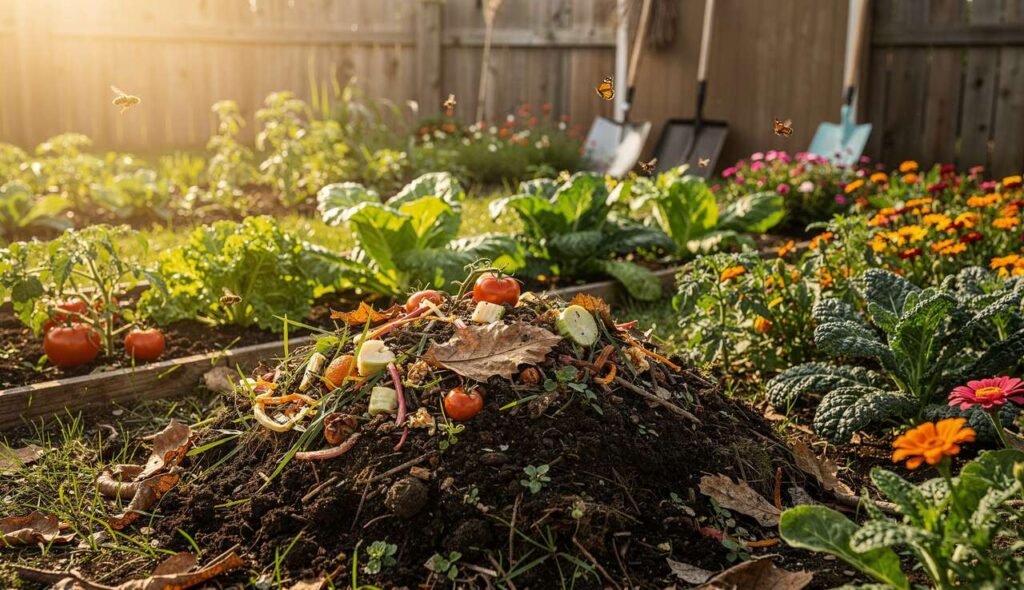
Effective composting relies on proper layering techniques that balance green and brown materials. Begin with a coarse brown layer of cardboard or woody stems to facilitate drainage, then alternate between nitrogen-rich food scraps and carbon-rich paper products. Each layer should measure approximately 10 to 15 centimetres thick, ensuring adequate contact between materials.
Moisture and aeration management
Maintaining correct moisture levels proves crucial for decomposition. Compost should feel like a wrung-out sponge—damp but not waterlogged. Excessive moisture causes anaerobic conditions and unpleasant odours, whilst insufficient water slows microbial activity. Regular turning, approximately every two weeks, introduces oxygen and distributes moisture evenly throughout the pile.
| Composting Stage | Temperature Range | Duration |
|---|---|---|
| Initial heating | 40-60°C | 1-2 weeks |
| Active decomposition | 55-70°C | 4-8 weeks |
| Maturation | 20-30°C | 8-12 weeks |
These fundamental techniques provide the foundation for successful composting, though refinements can significantly enhance results and accelerate the process.
Expert tips to optimise your compost
Material preparation strategies
Experienced composters recommend shredding or chopping larger items before adding them to bins. Smaller particle sizes increase surface area available for microbial colonisation, dramatically reducing decomposition time. Flower stems benefit from cutting into 5-centimetre segments, whilst cardboard should be torn into strips no wider than 10 centimetres.
Accelerating decomposition
Several methods can speed compost maturation without compromising quality:
- Adding finished compost or garden soil to introduce beneficial microorganisms
- Incorporating crushed eggshells to balance pH levels
- Maintaining optimal moisture consistently throughout the pile
- Turning material more frequently during warm weather
- Insulating bins during winter to maintain microbial activity
Troubleshooting common issues
Even experienced composters encounter occasional problems. Unpleasant odours typically indicate excessive moisture or insufficient aeration, remedied by adding brown materials and turning more frequently. Slow decomposition suggests inadequate nitrogen, correctable by incorporating fresh food scraps or grass clippings. Pest attraction can be minimised by burying food waste beneath brown layers and avoiding meat or dairy products.
Seasonal adjustments
Composting dynamics shift throughout the year, requiring adaptive management. Summer’s warmth accelerates decomposition but increases moisture loss through evaporation, necessitating more frequent watering. Winter’s cold slows microbial activity, though well-insulated bins maintain adequate temperatures for continued breakdown. Autumn provides abundant brown materials from fallen leaves, perfect for balancing nitrogen-rich party waste.
Once compost reaches maturity, strategic application maximises its benefits for garden plants and soil health.
Incorporating party compost into your garden
Determining compost readiness
Finished compost exhibits dark, crumbly texture with an earthy aroma reminiscent of forest floors. Original materials should be unrecognisable, completely broken down into uniform consistency. The compost should feel cool to touch, indicating that active decomposition has concluded. Testing involves squeezing a handful—properly finished compost holds shape briefly before crumbling apart.
Application methods for different garden areas
Various garden zones benefit from tailored application approaches:
- Vegetable beds: incorporate 5-10 centimetres of compost into top 15 centimetres of soil before planting
- Flower borders: spread 3-5 centimetre layer as mulch around established plants
- Lawns: apply thin layer (1-2 centimetres) and rake into grass surface
- Container plants: mix compost with potting medium at 1:3 ratio
- Trees and shrubs: create 5-centimetre ring around base, avoiding direct trunk contact
Timing considerations
Strategic timing maximises compost effectiveness. Spring application provides nutrients for vigorous growth as plants emerge from dormancy. Autumn incorporation allows soil organisms to integrate organic matter throughout winter, preparing beds for subsequent seasons. Top-dressing during growing seasons delivers continuous nutrition, supporting sustained plant development.
Monitoring results
Observing garden response guides future applications. Healthy plants display vibrant foliage, robust growth, and improved disease resistance. Soil structure gradually transforms, becoming more friable and easier to work. Earthworm populations typically increase noticeably, indicating enhanced soil health. These visible improvements confirm that party compost successfully enriches garden ecosystems.
The transformation of party waste into valuable garden compost represents a practical solution to multiple challenges facing modern households. By recognising the potential within celebration remnants, gardeners simultaneously reduce environmental impact, decrease expenses, and enhance soil fertility. The techniques outlined provide accessible pathways for converting discarded materials into nutrient-rich amendments that support thriving gardens. Whether managing small urban plots or extensive country gardens, incorporating party compost delivers measurable benefits whilst contributing to broader sustainability goals. This “green gold” awaits discovery in every household, ready to enrich both gardens and environmental consciousness.