


Gardeners constantly seek innovative methods to enhance soil fertility whilst reducing waste and environmental impact. The practice of burying dead wood in vegetable gardens has emerged as a permaculture technique that promises to transform organic debris into valuable soil resources. This method, known as hügelkultur in German permaculture circles, involves placing decomposing timber beneath the soil surface where it gradually breaks down, releasing nutrients and improving soil structure. Whilst some growers champion this approach as an ecological solution to waste management and soil enhancement, others question its suitability for productive vegetable cultivation. Understanding both the advantages and limitations of this technique proves essential for gardeners considering its implementation.
What is burying dead wood in the vegetable garden ?
The basic principle of wood burial
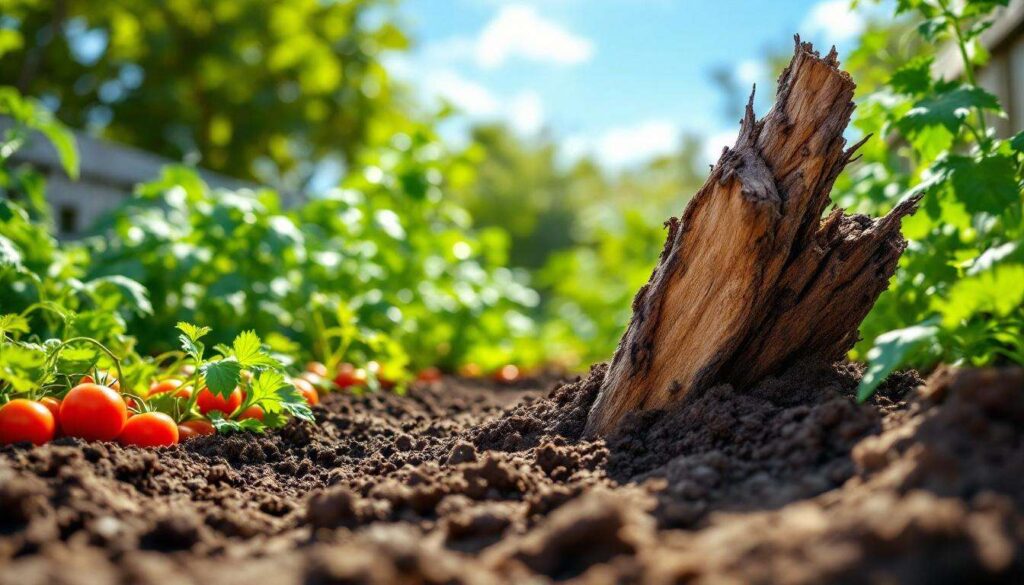
Burying dead wood in vegetable gardens involves creating underground layers of decomposing timber that serve as a long-term nutrient reservoir. This technique typically requires excavating trenches or mounds, filling them with logs, branches, and woody debris, then covering these materials with soil and compost. As the wood decomposes over several years, it creates a sponge-like structure that retains moisture and gradually releases nutrients to plant roots.
The process works on the principle that wood decomposition creates beneficial conditions for soil organisms whilst providing carbon-rich material that balances nitrogen in the growing environment. The buried wood acts as both a water reservoir and a habitat for beneficial microorganisms, fungi, and invertebrates that contribute to soil health.
Types of wood suitable for burial
Not all timber proves equally suitable for garden burial. The selection of appropriate wood types significantly affects the success of this technique:
- Hardwoods such as oak, beech, and ash decompose slowly, providing long-lasting benefits
- Softwoods including pine and spruce break down more rapidly but may release resins
- Fruit tree prunings offer excellent nutrient content when decomposed
- Untreated timber ensures no harmful chemicals leach into the soil
- Partially rotted wood accelerates the decomposition process and immediate benefits
Gardeners should avoid treated timber, painted wood, or materials exposed to preservatives, as these contain chemicals that contaminate soil and harm beneficial organisms. The size of wood pieces also matters, with a mixture of log sizes creating varied decomposition rates and structural benefits.
Understanding these fundamentals sets the stage for examining the broader environmental and financial advantages this practice offers.
Ecological and economic benefits
Waste reduction and carbon sequestration
The environmental advantages of burying dead wood extend beyond the garden boundaries. This practice diverts substantial quantities of organic waste from landfills and burning, both of which contribute to greenhouse gas emissions. By incorporating woody debris into garden beds, growers participate in carbon sequestration, locking atmospheric carbon into soil structures for extended periods.
The decomposition of buried wood occurs anaerobically in deeper layers, slowing the release of carbon dioxide compared to surface composting. This gradual breakdown process means carbon remains sequestered for years rather than months, contributing to climate change mitigation at the garden scale.
Cost savings and resource efficiency
From an economic perspective, burying dead wood reduces expenditure on commercial soil amendments and fertilisers. The financial benefits include:
| Expense category | Traditional approach | Wood burial method |
|---|---|---|
| Soil amendments | £50-100 annually | £0-20 annually |
| Waste disposal | £30-60 annually | £0 |
| Water consumption | Standard usage | Reduced by 20-30% |
| Fertiliser purchases | £40-80 annually | £10-30 annually |
These savings accumulate over time as the buried wood continues providing benefits for five to ten years depending on wood type and size. Additionally, gardeners utilise materials already available on their property, transforming pruning waste and storm-damaged branches into valuable resources rather than disposal problems.
Beyond financial considerations, the technique enhances water retention, potentially reducing irrigation needs by up to thirty percent in established beds. This efficiency proves particularly valuable during drought periods and in regions facing water restrictions.
These compelling environmental and economic advantages naturally lead to questions about how buried wood specifically affects soil characteristics and crop yields.
Influence on soil quality and productivity
Improvements to soil structure and drainage
The presence of decomposing wood fundamentally alters soil physical properties. As timber breaks down, it creates air pockets and channels that improve soil aeration and drainage. This enhanced structure proves particularly beneficial in heavy clay soils, where the woody material prevents compaction and facilitates root penetration.
The fungal networks that colonise buried wood extend throughout the surrounding soil, creating microscopic pathways that improve water infiltration and nutrient transport. These mycelial networks form symbiotic relationships with plant roots, enhancing nutrient uptake efficiency beyond what chemical fertilisers alone can achieve.
Nutrient cycling and microbial activity
Buried wood serves as a slow-release fertiliser, gradually providing essential nutrients as decomposition progresses:
- Nitrogen becomes available as fungi and bacteria break down wood fibres
- Phosphorus releases from cellular structures during decay
- Potassium and trace minerals leach into surrounding soil
- Carbon compounds feed beneficial soil organisms
- Lignin breakdown produces humic substances that improve nutrient retention
The decomposition process initially consumes nitrogen from surrounding soil, potentially creating temporary deficiencies. However, this nitrogen immobilisation reverses as decomposition advances, eventually releasing more nitrogen than initially borrowed. The timeline for this transition depends on wood type, with softwoods reaching the nutrient-positive phase within two years whilst hardwoods may require four years or longer.
Impact on crop yields and plant health
Research and anecdotal evidence suggest that established wood-burial beds produce enhanced crop yields compared to conventional methods. Plants grown above buried wood typically exhibit stronger growth, improved drought resistance, and increased resilience to pests and diseases. These benefits stem from the consistent moisture availability and diverse microbial community that buried wood supports.
However, productivity gains manifest gradually rather than immediately. First-year crops may show reduced vigour due to nitrogen immobilisation, whilst subsequent seasons demonstrate progressive improvement as the wood matures and nutrient release accelerates.
Whilst these soil improvements appear promising, gardeners must also consider potential complications that may arise from this practice.
Potential risks and drawbacks
Nitrogen depletion in early stages
The most significant challenge facing gardeners who bury fresh wood involves nitrogen immobilisation. Decomposer organisms require substantial nitrogen to break down carbon-rich wood, temporarily depleting this essential nutrient from the surrounding soil. This depletion manifests as yellowing leaves, stunted growth, and reduced yields in crops planted immediately above fresh wood burial sites.
The severity of nitrogen depletion correlates with wood freshness and carbon-to-nitrogen ratio. Fresh softwoods with high resin content prove particularly problematic, whilst partially decomposed hardwoods cause minimal disruption.
Pest and disease considerations
Buried wood creates habitat not only for beneficial organisms but also for potential pests and pathogens:
- Termites may colonise buried wood in warmer climates
- Fungal pathogens can spread from diseased wood to healthy plants
- Root-boring insects might use decaying wood as breeding sites
- Rodents occasionally nest in air pockets around large logs
- Honey fungus may spread through woody debris to living plants
These risks prove particularly relevant when burying wood from diseased trees or using timber infected with pathogenic fungi. Gardeners must carefully inspect wood sources and avoid materials showing signs of disease or pest infestation.
Physical and practical limitations
The labour intensity of wood burial presents a significant barrier for many gardeners. Excavating trenches, moving heavy logs, and constructing mounds requires substantial physical effort and time investment. Additionally, the technique proves impractical in shallow soils, rocky ground, or areas with high water tables where buried wood may remain waterlogged and fail to decompose properly.
Space constraints also limit applicability, as the method works best in dedicated beds rather than annual rotation systems. The long-term commitment required means gardeners cannot easily relocate or reconfigure beds once wood burial sites are established.
Recognising these challenges helps gardeners implement the technique more successfully through careful planning and appropriate methods.
Best practices for incorporating dead wood
Preparation and placement strategies
Successful wood burial begins with proper preparation. Gardeners should partially decompose fresh wood by leaving it exposed for six to twelve months before burial, or alternatively inoculate it with nitrogen-rich materials such as manure, blood meal, or grass clippings during installation. This preparation minimises nitrogen immobilisation and accelerates the transition to nutrient release.
Optimal placement involves creating layers that balance wood size and soil depth:
| Wood size | Burial depth | Soil cover thickness | Best applications |
|---|---|---|---|
| Large logs (15-30cm diameter) | 60-90cm | 30-45cm | Permanent beds, trees |
| Medium branches (5-15cm) | 30-60cm | 20-30cm | Vegetable beds, perennials |
| Small twigs (1-5cm) | 15-30cm | 15-20cm | Annual vegetables, herbs |
| Wood chips | 10-20cm | 10-15cm | Quick establishment beds |
Timing and crop selection
The timing of wood burial significantly affects success. Autumn installation allows winter decomposition to progress before spring planting, reducing nitrogen competition. Alternatively, gardeners can install wood burial beds and plant nitrogen-fixing legumes during the first season to counteract nutrient immobilisation whilst building soil fertility.
Crop selection for newly established beds should favour plants with lower nitrogen requirements or those that tolerate temporary nutrient limitations. Root vegetables, brassicas, and established perennials generally perform better than leafy greens or heavy-feeding crops during the first year.
Monitoring and maintenance
Successful implementation requires ongoing observation and adjustment. Gardeners should monitor plant health for signs of nitrogen deficiency and supplement with organic nitrogen sources if symptoms appear. Regular soil testing helps track nutrient levels and decomposition progress, allowing timely interventions when necessary.
Maintaining adequate moisture proves essential for decomposition, particularly during the establishment phase. Irrigation or mulching may be necessary in dry periods to keep buried wood sufficiently moist for microbial activity.
For gardeners uncertain about wood burial or facing situations where it proves impractical, several alternative approaches offer similar benefits.
Alternatives to dead wood for soil improvement
Composting and mulching methods
Traditional composting provides many benefits of wood burial without the labour intensity or nitrogen immobilisation risks. Hot composting breaks down woody materials more rapidly, producing finished compost within months rather than years. Surface mulching with wood chips offers similar moisture retention and gradual nutrient release whilst remaining accessible for annual cultivation.
Chip-and-drop mulching, where woody prunings are chipped and spread directly on beds, combines ease of application with progressive soil improvement. This method avoids nitrogen depletion issues whilst still incorporating woody material into the growing system.
Green manures and cover crops
For gardeners seeking rapid soil improvement, green manures provide an effective alternative:
- Legumes such as clover and vetch fix atmospheric nitrogen
- Deep-rooted plants including daikon radish break up compacted soil
- Fast-growing grasses add organic matter quickly
- Mustard family crops suppress soil-borne diseases
- Mixed covers provide diverse benefits simultaneously
These living soil amendments improve structure, add nutrients, and enhance biological activity without the long-term commitment or potential complications of buried wood.
Biochar and other carbon amendments
Biochar, produced by heating wood in low-oxygen conditions, offers carbon sequestration and soil improvement without decomposition delays. This stable carbon form improves water retention and nutrient holding capacity immediately upon application, avoiding the nitrogen immobilisation phase associated with raw wood burial.
Other carbon-rich amendments including leaf mould, well-rotted sawdust, and aged wood chips provide intermediate options that balance the benefits of woody material incorporation with practical application considerations.
Burying dead wood in vegetable gardens presents both significant opportunities and notable challenges for growers seeking sustainable soil improvement methods. The technique offers compelling environmental benefits through waste reduction and carbon sequestration whilst potentially reducing input costs and enhancing soil structure over time. However, success requires careful attention to wood selection, proper preparation to minimise nitrogen immobilisation, and realistic expectations about the timeline for productivity gains. The risks of pest attraction and disease transmission, combined with substantial labour requirements, mean this approach suits some situations better than others. Gardeners must weigh these factors against their specific circumstances, soil conditions, and long-term garden plans. For those willing to invest the initial effort and patience, buried wood can transform soil quality and create highly productive growing environments. Alternatively, composting, green manures, and biochar offer viable pathways to similar goals with different trade-offs in terms of time, labour, and immediate results.