


Transforming household waste into a functional garden irrigation system seemed like an impossible challenge until necessity sparked innovation. What began as a simple attempt to reduce water waste evolved into a fully automated watering solution built entirely from discarded materials that would have otherwise ended up in landfill.
The Genesis of the Project
The Initial Spark
The project originated during a particularly dry summer when water bills soared and garden plants struggled to survive. Daily watering became a tedious chore, often forgotten during busy periods. The realisation struck that modern households discard numerous items perfectly suited for water management, yet these materials typically go straight to waste collection.
The concept emerged from observing how rainwater simply disappeared down drains whilst plants withered nearby. This paradox highlighted an opportunity: why not capture and redistribute this free resource using materials already at hand ? The challenge was to create a system requiring minimal financial investment whilst maximising environmental benefit.
Setting Clear Objectives
Before beginning construction, several goals needed definition:
- Utilise only materials destined for disposal
- Create a system requiring no electricity
- Ensure consistent water delivery to plants
- Design for easy maintenance and expansion
- Achieve complete automation without manual intervention
These parameters shaped every subsequent decision, ensuring the project remained true to its sustainable origins. Understanding what materials were available became the next logical step.
The Unlikely Materials: an Ecological Realisation
Discovering Hidden Potential
A thorough examination of typical household waste revealed surprising possibilities. Plastic bottles, old hosepipes, and food containers suddenly appeared not as rubbish but as valuable components. The transformation in perspective was remarkable: items previously dismissed gained new purpose.
| Material | Original Purpose | New Function |
|---|---|---|
| Large plastic bottles | Beverage containers | Water reservoirs |
| Damaged garden hose | Watering tool | Distribution pipes |
| Yoghurt pots | Food packaging | Drip emitters |
| Old towels | Bathroom textiles | Capillary wicks |
The Environmental Wake-Up Call
Collecting these materials revealed the sheer volume of waste generated weekly. The average household produces enough plastic containers in a month to build several irrigation systems. This realisation transformed the project from a practical exercise into an environmental statement about consumption and waste.
Each component told a story of single-use culture. Bottles that held water for minutes could now deliver it for years. This shift from disposable to durable represented a small but meaningful rebellion against throwaway society. With materials assembled, the design phase could commence.
Designing the Automatic Watering System
The Gravity-Fed Principle
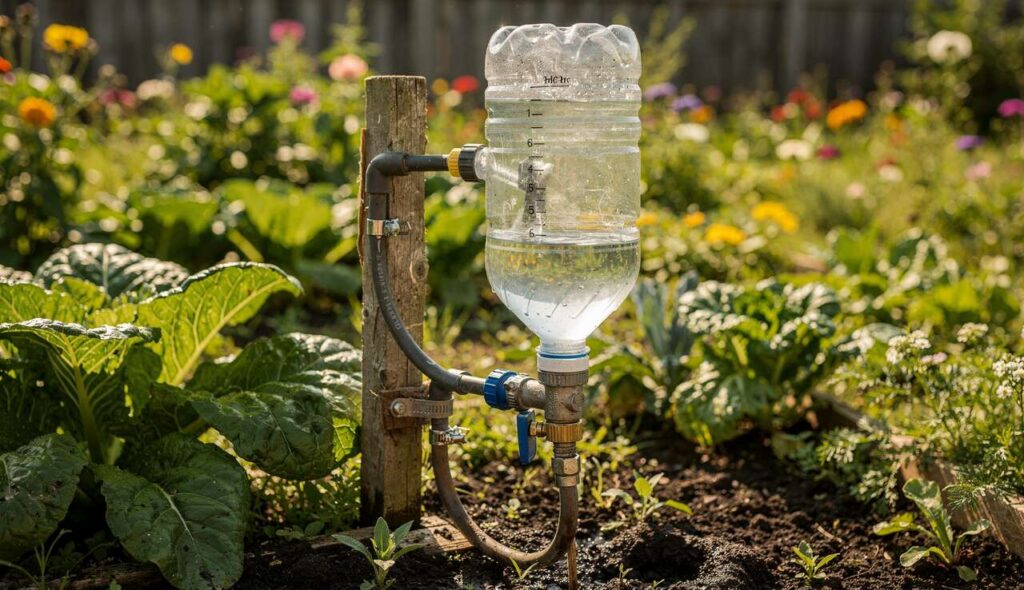
The system’s heart relied on gravity-fed water distribution, eliminating the need for pumps or electricity. Large bottles positioned above ground level created natural pressure, whilst smaller containers regulated flow. This ancient principle proved perfectly suited to modern recycling.
The design incorporated multiple reservoir bottles connected via the salvaged hosepipe. Holes punctured at strategic intervals allowed water to drip steadily onto plant roots. The beauty lay in its simplicity: no moving parts, no electronics, just physics and patience.
Creating the Automatic Refill Mechanism
True automation required a self-refilling system. A large funnel fashioned from a cut bottle was positioned to catch rainwater from a downpipe. This fed directly into the main reservoir, creating a closed loop that functioned independently during rainfall.
- Rainwater collection funnel directed runoff into storage
- Overflow pipe prevented flooding during heavy rain
- Filter made from old tights removed debris
- Float valve from a broken toilet cistern regulated maximum levels
Each element worked in harmony, transforming random rainfall into consistent irrigation. The theoretical design needed practical testing to prove its worth.
Installation and Initial Trials
The Construction Process
Assembly began with positioning the main reservoir at an elevated point. Securing bottles to a fence post provided the necessary height whilst keeping everything stable. The damaged hosepipe, cut into manageable sections, formed distribution lines running along plant rows.
Drilling precise holes proved crucial. Too large and water drained too quickly; too small and the system clogged. After experimentation, a 2mm diameter delivered optimal flow rates. Each hole was positioned directly above a plant, ensuring targeted watering without waste.
Early Challenges and Solutions
The first trials revealed several issues. Water pressure varied wildly between morning and evening as temperatures affected bottle flexibility. Plants closest to the reservoir received excessive water whilst those further away barely got moisture.
Solutions emerged through observation and adjustment:
- Adding pressure-regulating chambers from yoghurt pots
- Installing individual flow controls using adjustable clips
- Wrapping bottles in old fabric to stabilise temperature
- Elevating distant sections to maintain consistent pressure
Within two weeks, the system achieved reliable performance. The garden began showing signs of transformation, validating the effort invested in refinement.
Impact and Results on the Garden
Measurable Improvements
The changes became evident within the first month. Plants previously struggling with inconsistent watering developed stronger root systems and healthier foliage. The automated nature meant they received moisture even during busy periods or holidays.
| Metric | Before System | After System |
|---|---|---|
| Water bill | £45 monthly | £28 monthly |
| Plant survival rate | 65% | 92% |
| Time spent watering | 30 minutes daily | 5 minutes weekly |
| Waste diverted from landfill | 0 kg | 3.5 kg monthly |
Unexpected Benefits
Beyond the primary objectives, several surprising advantages emerged. The system attracted beneficial insects drawn to consistent moisture levels. Soil quality improved as regular watering prevented the hard, compacted conditions caused by drought cycles followed by flooding.
Neighbours began asking questions, sparking conversations about waste reduction and sustainable gardening. What started as a personal project became a community talking point, inspiring others to reconsider their own discarded materials. These successes provided valuable lessons worth sharing.
Tips for Embarking on Useful Recycling
Starting Your Own Project
Creating a similar system requires minimal technical skill but benefits from careful planning. Begin by auditing your waste stream to identify available materials. Most households generate sufficient components within a fortnight.
- Collect containers of various sizes for different functions
- Save any flexible tubing or pipes before disposal
- Keep fabric scraps for filters and insulation
- Document what you discard to spot patterns
- Start small with a single plant before expanding
Essential Considerations
Several factors determine success. Water quality matters: rainwater works best, but tap water functions adequately. Positioning requires thought: reservoirs need height whilst distribution lines need accessibility for maintenance.
Safety deserves attention. Ensure bottles are thoroughly cleaned before use to prevent contamination. Secure all elevated components properly to prevent accidents during strong winds. Check regularly for leaks or blockages, especially during the first month of operation.
Expanding the Concept
Once the basic system functions reliably, numerous enhancements become possible. Additional reservoirs increase capacity for larger gardens. Connecting multiple downpipes expands water collection. Some enthusiasts incorporate old aquarium filters for improved water quality.
The principles apply beyond irrigation. Similar approaches work for composting systems, pest control solutions, and even small-scale aquaponics. The key lies in viewing waste as raw material rather than rubbish, opening endless possibilities for creative reuse.
Building an automatic watering system from discarded materials proved that effective solutions need not require significant financial investment or complex technology. The project reduced water consumption, saved time, diverted waste from landfill, and improved garden health simultaneously. Most importantly, it demonstrated how shifting perspective transforms everyday rubbish into valuable resources. The system continues functioning reliably, requiring minimal maintenance whilst delivering consistent results. This experience confirmed that sustainable living often starts with simply reconsidering what we throw away.