


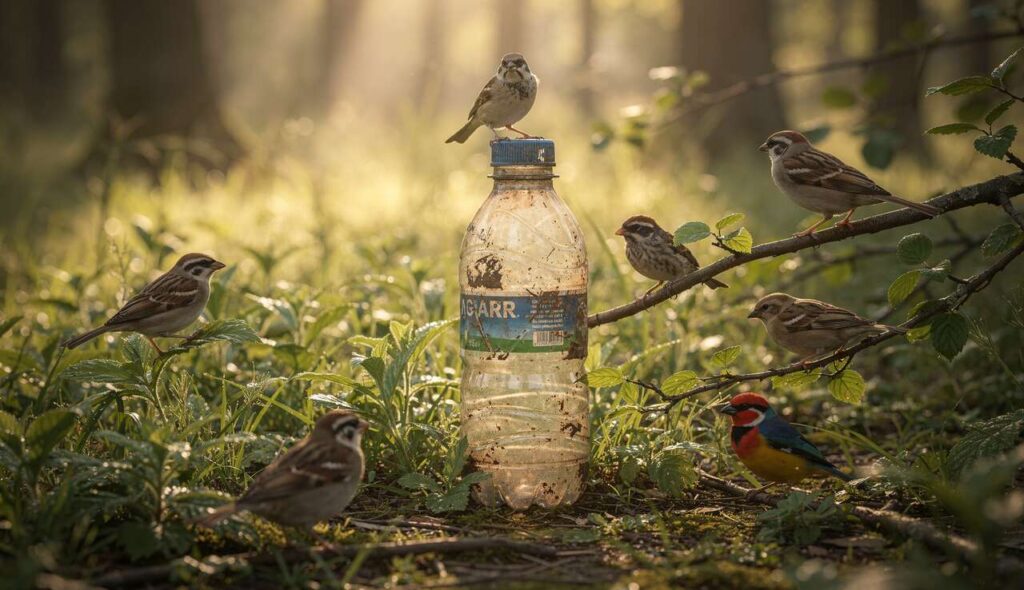
Across gardens and balconies, a simple yet ingenious creation is transforming the way people attract feathered visitors. This recycled bottle feeder has become an unexpected phenomenon, drawing countless birds with remarkable consistency. What makes this humble contraption so irresistible to our avian friends ? The answer lies in a clever combination of design, accessibility, and environmental consciousness that addresses both wildlife needs and sustainability concerns.
How the recycled bottle works
The mechanism behind this recycled bottle feeder relies on straightforward engineering principles that anyone can replicate at home. The basic structure involves a standard plastic bottle, typically between one and two litres, fitted with strategically positioned openings that allow birds to access seeds whilst protecting the food from weather elements.
The feeding mechanism explained
The bottle is suspended vertically or at a slight angle, with small apertures cut at precise intervals along its length. These openings serve dual purposes: they permit birds to retrieve seeds whilst simultaneously functioning as perches. The bottle’s narrow neck acts as a natural dispenser, releasing seeds gradually as birds feed, which prevents wastage and maintains freshness.
- Gravity-fed system ensures continuous seed availability
- Protected interior keeps food dry during rainfall
- Transparent material allows monitoring of seed levels
- Easy refilling through removable cap or base
Installation and positioning
Proper placement significantly influences the feeder’s effectiveness. The bottle should hang from a sturdy branch, hook, or purpose-built stand at approximately 1.5 to 2 metres above ground level. This height provides birds with security from ground predators whilst remaining accessible for maintenance. Positioning near natural cover such as shrubs or trees offers birds safe retreat options, increasing their confidence to visit regularly.
Understanding these practical elements sets the stage for exploring why birds find this particular design so compelling.
A natural magnet for birds
The feeder’s appeal extends beyond mere food provision, tapping into fundamental behavioural patterns that govern avian feeding habits. Birds demonstrate remarkable adaptability when encountering novel food sources, and this recycled bottle design aligns perfectly with their natural preferences.
Visual attraction factors
The transparent nature of plastic bottles offers a distinct advantage over opaque feeders. Birds can visually assess food availability before committing to land, reducing perceived risk. This transparency creates confidence, particularly amongst cautious species that prefer evaluating situations before engaging. The bottle’s cylindrical shape also mimics natural feeding environments such as hollow branches or seed-bearing plants.
Accessibility for various species
| Bird type | Feeding preference | Bottle adaptation |
|---|---|---|
| Small finches | Clinging feeders | Side perches accommodate grip |
| Tits and chickadees | Acrobatic feeding | Multiple angles accessible |
| Sparrows | Stable platforms | Larger openings provide stability |
The feeder’s design accommodates diverse feeding styles, from clingers to perchers, maximising visitation across species. This versatility explains the constant activity observed around these installations, as different birds utilise the same structure throughout the day.
Whilst the design proves attractive, the choice of construction materials plays an equally vital role in the feeder’s success.
The materials used
The beauty of this project lies in its resourceful use of discarded materials, transforming waste into functional wildlife support. The primary component remains the plastic bottle itself, but several additional elements enhance durability and effectiveness.
Core components and their sources
Standard polyethylene terephthalate (PET) bottles form the foundation, chosen for their weather resistance and transparency. These bottles, originally destined for landfills or recycling centres, gain extended utility through creative repurposing. Additional materials include:
- Wooden dowels or twigs for perching surfaces
- Weatherproof string or wire for suspension
- Optional waterproof sealant around openings
- Recycled bottle caps for adjustable dispensing
Durability and maintenance considerations
Despite using recycled materials, these feeders demonstrate impressive longevity when properly maintained. PET plastic withstands ultraviolet exposure and temperature fluctuations remarkably well, typically lasting multiple seasons. Regular cleaning every two to three weeks prevents mould accumulation and disease transmission, ensuring the feeder remains safe for visiting birds. Simple soap and water suffice for cleaning, avoiding harsh chemicals that might leave harmful residues.
Beyond their practical construction, these feeders contribute meaningfully to broader environmental objectives.
A positive ecological impact
The environmental benefits of recycled bottle feeders extend across multiple dimensions, addressing waste reduction, wildlife support, and community engagement simultaneously. Each feeder represents a small but significant step towards sustainable living.
Waste reduction metrics
Every bottle repurposed for bird feeding represents one fewer item entering waste streams. Considering that millions of plastic bottles are discarded daily, even modest adoption rates create measurable impact. A single household maintaining three bottle feeders throughout the year diverts approximately 12 to 15 bottles from landfills, assuming seasonal replacements.
Supporting local ecosystems
These feeders provide crucial nutritional support during challenging periods when natural food sources become scarce. Winter months, breeding seasons, and migration periods place enormous energetic demands on birds. Supplementary feeding through recycled bottle feeders helps maintain healthy populations, particularly in urban environments where natural habitats face increasing pressure.
- Increased survival rates during harsh weather
- Enhanced breeding success through improved nutrition
- Support for declining species populations
- Creation of wildlife corridors in urban settings
This particular innovation joins a growing movement of environmentally conscious wildlife projects gaining momentum worldwide.
Similar innovative projects
The recycled bottle feeder exists within a broader context of creative conservation initiatives that merge sustainability with wildlife support. These projects demonstrate how simple materials can generate significant ecological benefits.
Complementary recycled wildlife structures
Similar concepts have emerged across various applications, each addressing specific wildlife needs. Plastic bottle bird baths utilise cut bottles as water reservoirs, whilst milk carton nest boxes provide breeding spaces for cavity-nesting species. Tin can bee hotels support solitary bee populations, and wooden pallet insect hotels create overwintering habitats for beneficial invertebrates.
Community-led initiatives
Schools, community gardens, and environmental organisations have embraced these projects as educational tools and practical conservation measures. Workshop programmes teach participants to construct feeders whilst discussing broader environmental themes including plastic pollution, biodiversity loss, and individual responsibility. These initiatives foster environmental stewardship, particularly amongst younger generations who will shape future conservation efforts.
The cumulative effect of these individual actions carries profound implications for wildlife populations and ecosystem health.
Implications for biodiversity
The widespread adoption of recycled bottle feeders contributes to biodiversity conservation at local and regional scales. Whilst individual feeders might seem insignificant, their collective impact creates meaningful support networks for bird populations facing unprecedented challenges.
Population support mechanisms
Supplementary feeding through these devices helps stabilise declining bird populations by improving survival rates and reproductive success. Research indicates that well-maintained feeding stations can increase overwinter survival by 15 to 20 percent amongst small passerines. This support proves particularly valuable for species experiencing habitat loss or climate-related food scarcity.
Broader ecosystem benefits
Healthy bird populations provide essential ecosystem services including pest control, pollination, and seed dispersal. By supporting birds through recycled feeders, people indirectly maintain these ecological functions. Furthermore, increased bird activity attracts public attention to wildlife conservation, fostering broader environmental awareness and engagement.
- Enhanced genetic diversity through improved survival
- Maintained ecological relationships and food webs
- Increased public connection with local wildlife
- Foundation for citizen science monitoring programmes
These simple recycled bottle feeders demonstrate how accessible, low-cost interventions can generate substantial conservation benefits. By transforming waste into wildlife support, they address multiple environmental challenges simultaneously. The remarkable success of these feeders in attracting birds stems from thoughtful design that respects avian behaviour whilst promoting sustainability. As more people adopt this approach, the cumulative effect strengthens local ecosystems, reduces plastic waste, and nurtures meaningful connections between communities and the natural world surrounding them.