



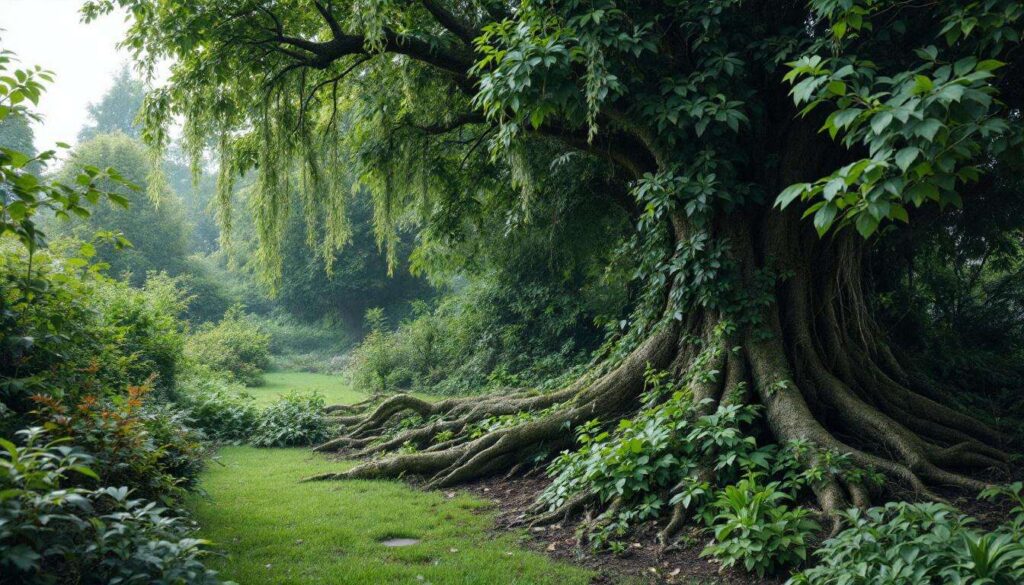
Garden enthusiasts across the United Kingdom face a critical challenge when selecting trees for their outdoor spaces. Whilst many species offer aesthetic appeal and environmental benefits, certain trees possess characteristics that enable them to spread aggressively, outcompeting native flora and disrupting local ecosystems. These invasive species can transform landscapes, reduce biodiversity, and create long-term management problems for homeowners and communities alike. Understanding which trees to avoid is essential for responsible gardening and environmental stewardship.
What are invasive trees ?
Defining invasive characteristics
Invasive trees are non-native species that establish themselves in environments outside their natural range and spread rapidly, causing ecological or economic harm. These trees typically share several common traits that enable their aggressive colonisation:
- Rapid growth rates that allow them to outcompete native vegetation
- Prolific seed production with high germination rates
- Ability to thrive in diverse soil and climate conditions
- Lack of natural predators or diseases in their adopted environment
- Allelopathic properties that inhibit growth of surrounding plants
Environmental and economic impacts
The consequences of planting invasive trees extend far beyond individual gardens. These species can fundamentally alter ecosystems by displacing native plants that provide essential habitats and food sources for wildlife. Birds, insects, and mammals that have evolved alongside indigenous flora often cannot utilise invasive species effectively, leading to reduced biodiversity. Economically, controlling invasive trees requires substantial resources, with local authorities and landowners spending considerable sums on removal and management programmes.
| Impact Category | Consequence |
|---|---|
| Ecological | Displacement of native species, reduced biodiversity |
| Economic | Costly removal and ongoing management |
| Structural | Damage to buildings, pavements, and infrastructure |
| Chemical | Soil alteration affecting surrounding vegetation |
Understanding these fundamental characteristics provides essential context for examining specific problematic species found in British gardens.
Rhododendron ponticum: a threat to biodiversity
Origins and spread patterns
Rhododendron ponticum represents one of the most serious invasive threats to British woodlands and gardens. Originally introduced from the Iberian Peninsula and Asia Minor during the eighteenth century as an ornamental shrub, this species has colonised vast areas of countryside, particularly in Scotland, Wales, and western England. Its dense evergreen foliage creates impenetrable thickets that exclude all other vegetation beneath its canopy.
Ecological damage mechanisms
This rhododendron species employs multiple strategies to dominate landscapes. Its leaves contain toxic compounds that acidify soil and prevent germination of native seeds. The dense shade it creates eliminates ground flora entirely, whilst its extensive root system competes aggressively for water and nutrients. Wildlife suffers considerably, as the plant provides neither food nor suitable nesting sites for native species.
- Produces up to one million seeds per plant annually
- Seeds remain viable in soil for extended periods
- Regenerates vigorously from cut stumps
- Harbours Phytophthora ramorum, a devastating plant pathogen
The challenges posed by rhododendron ponticum serve as a cautionary example when considering other potentially invasive conifers.
Leyland cypress: why it invades your spaces
Popularity and problematic growth
The Leyland cypress (× Cuprocyparis leylandii) became Britain’s most popular hedging plant due to its rapid growth and dense foliage. However, these very characteristics that made it commercially successful create serious problems for gardens and neighbourhoods. This hybrid conifer can grow up to one metre annually, quickly overwhelming small gardens and blocking light from neighbouring properties.
Neighbour disputes and legal implications
Leyland cypress hedges have generated thousands of disputes between neighbours, prompting specific legislation addressing high hedges. The Anti-social Behaviour Act 2003 empowers local authorities to intervene when evergreen hedges exceed two metres in height and cause reasonable obstruction to light or views.
| Growth Characteristic | Measurement |
|---|---|
| Annual height increase | 60-100 cm |
| Potential mature height | 35 metres |
| Root spread radius | Up to 8 metres |
| Water consumption | 50 litres daily (mature tree) |
Environmental concerns beyond gardens
Beyond social conflicts, Leyland cypress creates ecological problems by forming monocultures that support minimal wildlife. Its dense canopy prevents understorey development, whilst its allelopathic properties inhibit nearby plant growth. The species also consumes extraordinary quantities of water, potentially affecting soil moisture levels across entire neighbourhoods.
Whilst cypress varieties create problems through excessive growth, other invasive species employ different strategies to dominate landscapes.
Robinia pseudoacacia: a tree to avoid
Deceptive appeal and aggressive behaviour
Robinia pseudoacacia, commonly known as false acacia or black locust, attracts gardeners with its fragrant white flowers and attractive pinnate foliage. Native to North America, this species has established itself throughout Europe, including the United Kingdom. However, beneath its ornamental exterior lies an aggressively invasive nature that makes it unsuitable for most garden settings.
Reproductive strategies and spread mechanisms
False acacia employs both seed production and vegetative reproduction to colonise new areas. Its root system produces numerous suckers that emerge considerable distances from the parent tree, creating dense thickets. These suckers prove extremely difficult to eradicate, as cutting stimulates even more vigorous regrowth.
- Produces extensive root suckers up to 20 metres from parent tree
- Fixes nitrogen, altering soil chemistry for native plants
- Bears sharp thorns that pose safety hazards
- Drops toxic leaves and bark harmful to livestock
- Establishes quickly on disturbed or poor soils
Structural and safety concerns
Beyond ecological impacts, robinia presents practical problems for property owners. Its brittle wood breaks easily during storms, creating hazards near buildings and pathways. The species also produces allelopathic compounds that inhibit growth of surrounding vegetation, whilst its nitrogen-fixing ability fundamentally alters soil composition.
Whilst robinia spreads through root systems, other invasive plants utilise equally effective but different colonisation methods.
Bamboo: hidden dangers beneath its exotic appearance
Running versus clumping varieties
Bamboo species divide into two categories based on growth habit: clumping and running types. Whilst clumping varieties remain relatively contained, running bamboos possess rhizomes that spread horizontally underground, emerging unpredictably across gardens and into neighbouring properties. These invasive runners can travel several metres annually, penetrating barriers and damaging structures.
Containment challenges and property damage
Many homeowners plant bamboo without understanding its aggressive growth potential. Running species such as golden bamboo (Phyllostachys aurea) and Japanese knotweed’s relative, arrow bamboo (Pseudosasa japonica), create extensive underground networks that prove extraordinarily difficult to control.
| Bamboo Type | Annual Spread | Control Difficulty |
|---|---|---|
| Running bamboo | 1-5 metres | Extremely high |
| Clumping bamboo | 5-15 cm | Low to moderate |
Legal and financial implications
Bamboo encroachment onto neighbouring properties can result in legal disputes and significant financial liability. Rhizomes can penetrate foundations, drainage systems, and pavements, causing structural damage costing thousands of pounds to repair. Some mortgage lenders now require bamboo surveys before approving loans on affected properties.
The underground threat posed by bamboo contrasts with species that spread primarily through airborne seeds.
Buddleja davidii: the unwanted butterfly bush
Paradoxical popularity and invasiveness
Buddleja davidii, beloved for attracting butterflies and other pollinators, presents a complex case of an ornamental plant that has become problematic in wild landscapes. Native to China, this shrub colonises disturbed ground, railway embankments, and urban wasteland with remarkable efficiency. Each plant produces millions of tiny seeds that disperse widely on wind currents.
Ecological considerations
Whilst buddleja does attract butterflies, it functions primarily as a nectar source rather than supporting complete butterfly life cycles. Native caterpillar food plants provide far greater ecological value. The species colonises areas where native vegetation would naturally regenerate, preventing establishment of more beneficial indigenous plants.
- Single plant produces up to three million seeds annually
- Seeds germinate readily on bare ground and masonry
- Tolerates poor soils and urban pollution
- Self-seeds prolifically throughout gardens
- Colonises walls, causing structural damage
Management in garden contexts
Gardeners who choose to grow buddleja should deadhead flowers before seed formation and monitor for unwanted seedlings. However, its persistent appearance in unexpected locations demonstrates the difficulty of containing this species once established in an area.
Recognising problematic species represents only the first step towards responsible garden management.
How to identify and manage invasive trees
Recognition techniques
Identifying invasive trees before they establish requires understanding key characteristics. Vigorous growth, prolific seeding, and ability to thrive in diverse conditions often indicate invasive potential. Resources from organisations such as the Non-Native Species Secretariat provide identification guides and distribution maps for problematic species.
Removal and control strategies
Effective management of invasive trees depends on species-specific approaches. Physical removal proves most effective for young specimens, whilst established trees may require professional intervention. Chemical control using appropriate herbicides sometimes becomes necessary, particularly for species that regenerate from root fragments.
- Remove young invasive trees before root systems establish
- Dispose of plant material responsibly to prevent spread
- Monitor gardens regularly for unwanted seedlings
- Consider professional removal for large specimens
- Replace invasive species with native alternatives
Selecting appropriate alternatives
Choosing native or non-invasive ornamental trees provides aesthetic appeal whilst supporting local ecosystems. Species such as field maple (Acer campestre), silver birch (Betula pendula), and rowan (Sorbus aucuparia) offer beauty, wildlife value, and manageable growth habits suitable for British gardens.
| Native Alternative | Wildlife Value | Mature Height |
|---|---|---|
| Hawthorn (Crataegus monogyna) | Supports 300+ insect species | 5-14 metres |
| Crab apple (Malus sylvestris) | Flowers and fruit for pollinators/birds | 6-10 metres |
| Holly (Ilex aquifolium) | Winter berries, nesting sites | 5-15 metres |
Garden choices carry consequences extending far beyond individual properties. Selecting appropriate trees protects native biodiversity, prevents costly management problems, and contributes to healthier local ecosystems. The six species discussed demonstrate how attractive ornamental plants can become environmental liabilities. By prioritising native alternatives and avoiding known invasive species, gardeners play a vital role in preserving Britain’s natural heritage whilst creating beautiful, functional outdoor spaces that benefit wildlife and communities alike.