



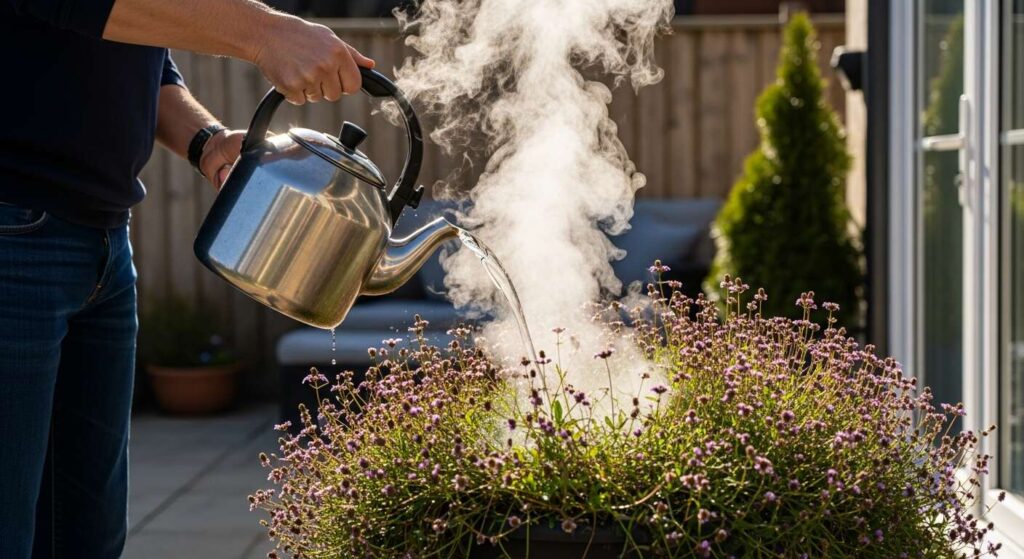
Gardeners across the United Kingdom are increasingly seeking effective yet environmentally responsible methods to control unwanted vegetation on their patios and pathways. The persistent growth of weeds between paving stones and in cracks presents both an aesthetic and practical challenge. While chemical herbicides have traditionally dominated the market, concerns about their environmental impact and potential health risks have prompted many to explore alternative solutions. Among these, one remarkably simple technique has gained considerable attention: the application of boiling water directly onto weeds. This method relies on the destructive power of extreme heat to eliminate unwanted plants without introducing synthetic chemicals into the garden environment.
Boiling water: an ecological solution to get rid of weeds
The environmental credentials of thermal weeding
The use of boiling water represents a genuinely sustainable approach to weed management that aligns with contemporary environmental priorities. Unlike synthetic herbicides, which can persist in soil and waterways for extended periods, hot water leaves no chemical residue whatsoever. This method proves particularly valuable for gardeners committed to organic gardening principles or those concerned about the welfare of pets and children who frequently use outdoor spaces.
The ecological advantages extend beyond the absence of chemicals. Boiling water requires no specialised equipment beyond standard kitchen items, eliminating the need for plastic containers, spray bottles, or protective gear typically associated with chemical treatments. The method produces zero waste and involves no packaging or disposal concerns, making it an exemplary choice for environmentally conscious households.
Cost-effectiveness and accessibility
Financial considerations further enhance the appeal of this technique. The primary cost involves only the energy required to boil water, which remains substantially lower than purchasing commercial herbicides repeatedly throughout the growing season. Most households already possess the necessary equipment, eliminating any initial investment.
| Method | Approximate cost per application | Environmental impact |
|---|---|---|
| Boiling water | £0.05-£0.10 | Minimal |
| Chemical herbicide | £2.00-£5.00 | Moderate to high |
| Organic herbicide | £3.00-£7.00 | Low to moderate |
The accessibility of this method cannot be overstated. It requires no specialist knowledge, training, or certification, making it available to every household regardless of gardening experience or technical expertise.
Understanding precisely how boiling water achieves its weed-killing effect requires examination of the biological processes at cellular level.
How boiling water destroys plant cells
The science of thermal destruction
Plant cells, like all living cells, contain proteins and enzymes that function within specific temperature ranges. When exposed to temperatures exceeding 57°C, these proteins begin to denature, meaning their molecular structure breaks down irreversibly. This process, known as thermal denaturation, effectively destroys the cell’s ability to function.
Boiling water, at 100°C, far exceeds this critical threshold. Upon contact with plant tissue, the extreme heat causes immediate and catastrophic damage to cellular membranes. These membranes, composed of lipid bilayers, lose their structural integrity when exposed to such temperatures, resulting in cell rupture and the leakage of cellular contents.
The cascade of cellular damage
The destruction process occurs through several simultaneous mechanisms:
- Protein coagulation: essential enzymes and structural proteins lose their functional shape
- Membrane disruption: cell walls and membranes collapse, preventing nutrient transport
- Chloroplast destruction: photosynthetic machinery becomes permanently damaged
- Vascular tissue breakdown: the plant’s internal transport system ceases to function
This multi-faceted assault on cellular integrity ensures that affected plant tissues cannot recover. Within hours of treatment, visible wilting occurs as cells lose their turgor pressure, the internal water pressure that keeps plants upright and rigid.
Effectiveness factors and limitations
Research indicates that optimal effectiveness requires sustained contact at temperatures above 80°C for approximately five seconds. However, a significant challenge emerges: boiling water loses heat rapidly when exposed to air and cooler surfaces. By the time it reaches the target weed, the temperature may have dropped to around 64°C, reducing its destructive potential.
The method proves most effective against young, tender growth where cell walls remain relatively thin and vulnerable. Mature plants with established root systems and tougher tissues present greater challenges, as the heat may not penetrate deeply enough to destroy underground structures.
Having established the biological mechanisms, practical application requires careful attention to safety protocols.
Safe preparation and use of boiling water
Essential safety equipment and precautions
Working with boiling water demands rigorous safety measures to prevent serious burns. Before beginning any treatment, gardeners should assemble appropriate protective equipment:
- Heat-resistant gloves designed for handling hot liquids
- Closed-toe footwear with non-slip soles
- Long trousers and long-sleeved shirts to protect skin
- A kettle or pot with a secure, heat-resistant handle
- A stable pouring vessel with a spout for controlled application
Never attempt this method when children or pets are present in the treatment area. The risk of accidental spillage or splashing poses serious hazards that outweigh any convenience gained from rushing the process.
Step-by-step application technique
Proper technique maximises effectiveness whilst minimising risk:
Begin by identifying target weeds and ensuring the surrounding area is clear of obstacles. Boil water in a kettle, allowing it to reach a full rolling boil. Transfer the water carefully to a watering can or similar vessel with a narrow spout for precise application.
Approach each weed slowly and deliberately, pouring the water directly onto the crown of the plant where stems emerge from the ground. This concentration of heat at the growth point maximises damage to vital tissues. Apply sufficient volume to thoroughly saturate the target area, typically 250-500ml per weed depending on size.
Optimal timing and conditions
Weather conditions significantly influence treatment success. Choose calm, dry days when wind will not disperse heat or cause splashing. Early morning application, when plants are most turgid with water, may enhance effectiveness as the thermal shock contrasts more dramatically with the plant’s internal temperature.
Avoid treating during or immediately before rainfall, as water dilutes the thermal effect and may wash away heat before sufficient damage occurs. Similarly, extremely hot days may reduce the temperature differential, potentially diminishing effectiveness.
Despite its advantages, this method carries inherent limitations that gardeners must understand.
Limitations and precautions to take
Incomplete root destruction
The most significant limitation concerns root survival. Boiling water penetrates only the upper layers of soil, typically affecting tissue within the top 2-3 centimetres. Perennial weeds with deep tap roots or extensive underground rhizomes often regenerate from these undamaged structures.
Species such as dandelions, thistles, and bindweed possess remarkable regenerative capacity. A single treatment may eliminate visible growth temporarily, but new shoots frequently emerge within weeks. Effective control of these persistent species requires repeated applications, potentially over several growing seasons.
Collateral damage to desirable plants
Boiling water demonstrates no selectivity whatsoever. Any plant tissue contacted by the scalding liquid will suffer damage, making precision absolutely critical. Particular care must be exercised when treating weeds growing near:
- Ornamental plants with shallow root systems
- Lawn edges where grass roots may extend beneath paving
- Ground cover plants that spread through underground runners
- Young shrubs or perennials with developing root structures
Even small amounts of boiling water can cause significant harm to valued plants. The heat may also affect beneficial soil organisms in the immediate treatment zone, though this impact remains localised and temporary.
Practical challenges for large-scale application
Treating extensive areas presents considerable logistical difficulties. The method requires repeatedly boiling water, carrying heavy vessels, and maintaining concentration throughout lengthy application sessions. This labour-intensive process proves impractical for driveways, large patios, or commercial spaces.
The physical demands increase risk of accidents through fatigue, whilst the time investment may prove prohibitive for busy households. Additionally, the energy consumption for boiling large volumes of water repeatedly diminishes the environmental advantages.
Soil and surface considerations
Certain paving materials may be susceptible to damage from extreme heat. Repeated applications on delicate surfaces such as some natural stones or composite materials could potentially cause discolouration or structural weakening. Testing on an inconspicuous area before widespread treatment is advisable.
For those seeking alternatives or complementary approaches, several natural options merit consideration.
Natural alternatives to boiling water weeding
Vinegar-based solutions
Horticultural vinegar, containing acetic acid concentrations of 20% or higher, offers a potent alternative to boiling water. The acid desiccates plant tissues, causing rapid wilting. However, this method also affects soil pH and requires careful application to avoid damaging desirable plants.
Standard household vinegar, at 5% acidity, proves less effective and typically requires multiple applications. The strong odour and potential for drift during spraying represent additional considerations.
Salt treatments
Sodium chloride applied directly to weeds can effectively desiccate plant tissues. However, salt persists in soil and can render areas permanently inhospitable to all plant growth. This method should be reserved exclusively for areas where no future planting is desired, such as cracks in concrete pathways.
Flame weeding techniques
Specialised propane torches designed for weed control deliver intense, focused heat that destroys plant cells similarly to boiling water. This method offers greater precision and eliminates the need to carry heavy containers. However, it requires equipment investment and presents fire hazards, particularly during dry conditions.
Physical removal methods
Manual extraction remains the most thorough approach for eliminating weeds, particularly those with deep root systems. Tools such as:
- Dandelion weeders with forked tips for tap roots
- Paving weeders with narrow blades for cracks
- Wire brushes for scraping between stones
- Pressure washers for dislodging seedlings
These methods require more physical effort but ensure complete removal including root structures, reducing regrowth potential significantly.
Preventative strategies
Long-term weed suppression often proves more effective than repeated reactive treatments. Polymeric sand swept between pavers hardens to prevent weed establishment. Similarly, landscape fabric beneath gravel areas blocks light whilst allowing drainage.
Regular maintenance, including prompt removal of seedlings before they establish extensive roots, reduces the overall weed burden considerably. This proactive approach minimises the need for any control method, whether thermal, chemical, or mechanical.
Addressing common queries provides clarity for those considering this method.
Answers to frequently asked questions on the use of boiling water for weeding
How quickly do weeds die after treatment ?
Visible wilting typically occurs within two to four hours of application. Tender annual weeds may show signs of damage within minutes, whilst tougher perennials require longer. Complete death of above-ground tissues usually manifests within 24-48 hours, though root survival may enable regrowth.
Can pasta or potato water be used instead ?
Water used for cooking starchy foods contains dissolved salts and starches that may enhance weed-killing properties. The salt content, in particular, adds a desiccating effect. However, the primary mechanism remains thermal damage, so any boiling water proves effective regardless of prior use.
How many treatments are typically necessary ?
Annual weeds with shallow roots often succumb to a single application. Perennial species with extensive underground structures typically require three to five treatments over a growing season. Persistent weeds such as bindweed or horsetail may demand ongoing management across multiple years.
Does boiling water harm beneficial insects ?
Direct contact with boiling water will kill any invertebrate. However, the localised nature of application means impact on beneficial insect populations remains minimal compared to chemical herbicides that may affect wider areas through drift or soil contamination.
Is this method suitable for all seasons ?
Treatment proves most effective during active growth periods when plants transport nutrients and water rapidly through their tissues. Spring and early summer applications yield optimal results. Winter treatments may prove less effective as many weeds enter dormancy, reducing their metabolic activity and susceptibility to damage.
The technique of using boiling water for weed control offers gardeners a practical, affordable, and environmentally sound option for managing unwanted vegetation on patios and pathways. Its effectiveness stems from the fundamental biological principle that extreme heat irreversibly damages plant cells, causing rapid tissue death. The method excels in treating small areas and young weeds, providing visible results within hours without introducing chemical residues into the garden environment. However, limitations including incomplete root destruction, potential collateral damage to desirable plants, and impracticality for large-scale applications must be carefully considered. Success requires proper safety precautions, appropriate timing, and realistic expectations about the need for repeated treatments, particularly for perennial species. When integrated with complementary approaches such as physical removal and preventative measures, thermal weeding with boiling water forms a valuable component of sustainable garden maintenance strategies that prioritise both effectiveness and environmental responsibility.