

Most vegetable garden failures stem from a handful of recurring issues that gardeners unknowingly perpetuate season after season. Rather than addressing symptoms with quick fixes, experienced growers focus on targeted interventions that tackle root causes. These strategic actions create resilient growing environments where plants thrive naturally, reducing the need for constant troubleshooting and chemical interventions.
Analyse the quality of your vegetable garden soil
Understanding your soil composition
The foundation of a productive vegetable garden lies beneath the surface. Soil quality determines nutrient availability, drainage capacity, and root development, yet many gardeners plant without understanding what they’re working with. A proper soil analysis reveals pH levels, nutrient deficiencies, and structural problems that affect every crop you grow.
Conducting a basic soil test requires minimal investment but yields invaluable information. Professional laboratory tests provide comprehensive data on nitrogen, phosphorus, potassium, and trace minerals, whilst pH testing kits offer immediate feedback on acidity or alkalinity. Most vegetables prefer slightly acidic to neutral soil, with pH values between 6.0 and 7.0.
Interpreting test results for actionable improvements
Once you receive soil test results, the data translates into specific amendments. Clay-heavy soils benefit from organic matter incorporation, whilst sandy soils require compost to improve water retention. The following adjustments address common deficiencies:
- Low pH: add agricultural lime or wood ash to raise alkalinity
- High pH: incorporate sulphur or acidic compost to lower levels
- Nitrogen deficiency: apply blood meal or well-rotted manure
- Phosphorus shortage: use bone meal or rock phosphate
- Potassium lack: add kelp meal or greensand
Addressing soil quality creates the optimal environment for the next critical factor in garden health: water management.
Optimise watering to avoid diseases
The connection between moisture and plant disease
Improper watering practices account for nearly half of all vegetable garden diseases, from fungal infections to bacterial blights. Overhead watering during evening hours creates prolonged leaf wetness, the perfect breeding ground for pathogens. Timing, method, and frequency matter far more than the volume of water applied.
Morning watering allows foliage to dry throughout the day, dramatically reducing disease pressure. Drip irrigation or soaker hoses deliver water directly to root zones, keeping leaves dry whilst ensuring consistent moisture levels. This targeted approach conserves water whilst protecting plant health.
Establishing proper watering schedules
| Plant type | Watering frequency | Depth required |
|---|---|---|
| Leafy greens | Every 2-3 days | 15-20 cm |
| Fruiting vegetables | Every 3-4 days | 30-40 cm |
| Root vegetables | Every 4-5 days | 20-30 cm |
Deep, infrequent watering encourages robust root systems that access moisture reserves during dry spells. Shallow, frequent watering creates weak roots vulnerable to stress. Monitoring soil moisture at root depth rather than surface appearance prevents both overwatering and drought stress.
Strategic watering complements another powerful technique that naturally suppresses problems: companion planting.
Use the right plant combinations
Scientific basis for companion planting
Certain plant combinations create mutually beneficial relationships that reduce pest pressure, improve pollination, and enhance nutrient uptake. Companion planting isn’t folklore; it’s based on documented biochemical interactions and ecological principles. Allelopathic compounds, root exudates, and physical structures all play roles in these partnerships.
Tomatoes paired with basil demonstrate classic companion synergy. The basil repels aphids and whiteflies whilst potentially enhancing tomato flavour through root zone interactions. Similarly, carrots and onions planted together confuse pests that locate hosts by scent, reducing damage to both crops.
Proven combinations for common vegetables
- Beans with sweetcorn: beans fix nitrogen whilst corn provides climbing support
- Lettuce under brassicas: shade-tolerant greens utilise space beneath larger plants
- Marigolds throughout: their roots release compounds that suppress nematodes
- Nasturtiums as trap crops: aphids prefer them over vegetables
- Garlic near roses and brassicas: sulphur compounds deter numerous pests
Avoid problematic combinations such as fennel near most vegetables, as it inhibits growth through allelopathy. Brassicas and strawberries also compete poorly, whilst beans and onions planted together often underperform.
Whilst companion planting optimises space within a season, a broader temporal strategy prevents soil depletion across seasons.
Practice crop rotation to preserve soil
Why rotation prevents problems
Growing the same plant families in identical locations year after year depletes specific nutrients whilst allowing soil-borne diseases and pests to accumulate. Crop rotation breaks these cycles by alternating plant families with different nutritional requirements and pest vulnerabilities. A well-planned rotation maintains soil fertility naturally, reducing reliance on external inputs.
The principle rests on botanical family groupings. Solanaceae (tomatoes, peppers, aubergines) share diseases and nutrient demands. Rotating them with Fabaceae (beans, peas) that fix nitrogen, then Brassicaceae (cabbage, broccoli) that utilise that nitrogen, creates a self-sustaining system.
Implementing a practical rotation plan
| Year | Plot A | Plot B | Plot C | Plot D |
|---|---|---|---|---|
| 1 | Legumes | Brassicas | Roots | Solanaceae |
| 2 | Brassicas | Roots | Solanaceae | Legumes |
| 3 | Roots | Solanaceae | Legumes | Brassicas |
| 4 | Solanaceae | Legumes | Brassicas | Roots |
This four-year rotation ensures no family returns to the same plot before the fourth season, allowing sufficient time for pathogen populations to decline and nutrient balances to restore. Record-keeping proves essential, as memory alone rarely suffices across multiple seasons.
Even with optimal rotation and soil management, occasional pest problems require direct intervention.
Effectively deal with garden pests
Integrated pest management principles
Effective pest control prioritises prevention over reaction, using chemical interventions only as final resorts. Integrated pest management combines cultural practices, physical barriers, biological controls, and targeted treatments. This layered approach maintains pest populations below damaging thresholds whilst preserving beneficial insects.
Regular monitoring identifies problems early when interventions prove most effective. Weekly inspections of leaf undersides, growing tips, and soil surfaces reveal pest presence before populations explode. Understanding pest life cycles allows precisely timed interventions that disrupt reproduction.
Practical control methods
- Physical barriers: netting excludes birds and butterflies, copper tape deters slugs
- Handpicking: removing visible pests daily prevents population establishment
- Biological controls: introducing ladybirds, lacewings, or parasitic wasps
- Organic sprays: neem oil, insecticidal soap, or garlic solutions for soft-bodied pests
- Trap crops: sacrificial plantings that concentrate pests away from main crops
Encouraging natural predators through diverse plantings and pesticide avoidance creates self-regulating ecosystems. A garden with abundant beneficial insects requires minimal intervention, as predator-prey relationships maintain balance naturally.
Healthy soil supports plants that naturally resist pests, bringing focus back to soil improvement through composting.
Maximise compost use for healthy soil
Creating quality compost
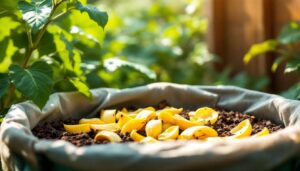
Compost transforms organic waste into nutrient-rich soil amendment that improves structure, fertility, and microbial activity. Proper composting requires balancing carbon-rich “browns” with nitrogen-rich “greens” in roughly 30:1 ratios. This balance fuels decomposition whilst preventing odours and attracting pests.
Successful composting depends on adequate moisture, oxygen, and particle size. Materials should feel like a wrung-out sponge, with regular turning introducing oxygen that supports aerobic decomposition. Chopping materials into smaller pieces accelerates breakdown by increasing surface area for microbial action.
Strategic compost application
Finished compost, dark and crumbly with an earthy smell, serves multiple purposes throughout the garden. Apply 5-10 cm as mulch around established plants to suppress weeds, retain moisture, and gradually release nutrients. Working compost into planting holes provides transplants with immediate access to nutrients and beneficial microorganisms.
Timing applications to coincide with peak nutrient demands maximises benefits. Heavy feeders like tomatoes and squash benefit from compost incorporation at planting and side-dressing during fruiting. Root vegetables prefer compost applied to previous crops, as fresh additions can cause forking.
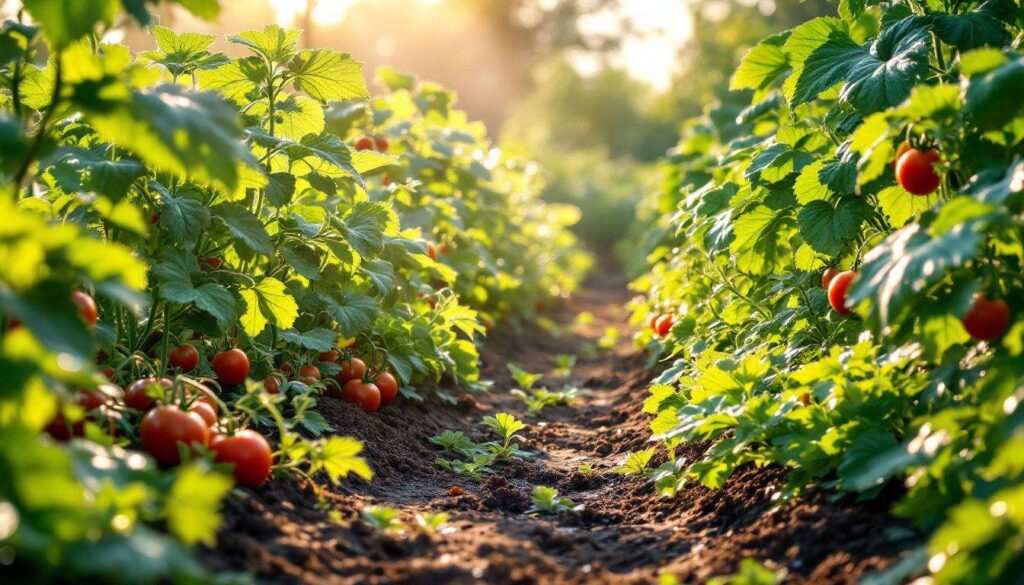
These targeted interventions work synergistically, each amplifying the others’ effectiveness. Healthy soil supports vigorous plants that resist pests and diseases, whilst proper watering and rotation maintain that soil health across seasons. Rather than chasing individual problems, addressing these fundamental factors creates gardens that largely manage themselves, requiring minimal intervention whilst producing abundant harvests season after season.