

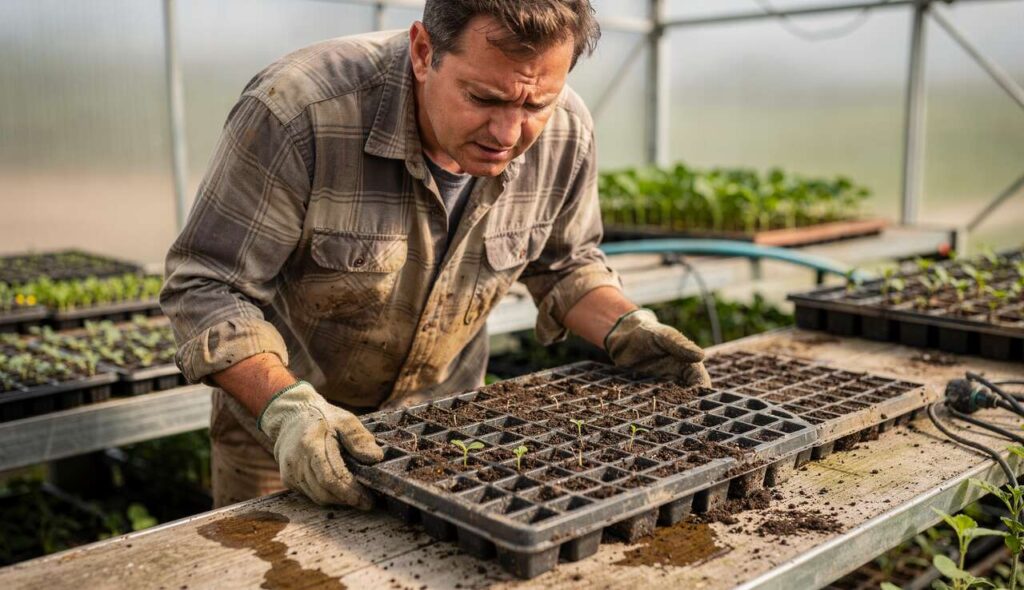
Every market gardener faces the frustration of seeds that simply refuse to sprout. Whether you’re cultivating vegetables for commercial production or managing a smallholding, failed germination represents lost time, resources and potential income. Professional growers understand that successful seed germination depends on numerous interconnected factors, from soil temperature to seed quality. When trays remain stubbornly bare weeks after sowing, the problem rarely stems from a single cause. Rather, multiple environmental and biological factors often conspire to prevent those crucial first shoots from emerging. Understanding why seeds fail to germinate and knowing how to respond separates experienced market gardeners from frustrated beginners.
Understanding the Causes of Non-germination
Seed viability and dormancy issues
Seeds possess an internal biological clock that determines their capacity to germinate. Seed viability refers to whether a seed is alive and capable of sprouting under optimal conditions. Many factors affect viability, including age, storage conditions and genetic quality. Seeds stored in warm, humid environments deteriorate rapidly, whilst those kept cool and dry maintain viability for years. Dormancy represents a different challenge altogether. Some seeds possess built-in mechanisms that prevent germination until specific conditions are met, such as exposure to cold temperatures or passage through an animal’s digestive system.
Environmental barriers to germination
The surrounding environment plays a decisive role in whether seeds successfully germinate. Temperature fluctuations, inadequate moisture levels and poor soil structure create hostile conditions for emerging seedlings. Market gardeners frequently encounter the following environmental obstacles:
- Soil temperatures outside the optimal range for specific crop varieties
- Compacted growing medium that prevents oxygen reaching the seed
- Excessive moisture leading to fungal infections and seed rot
- Insufficient light penetration for light-dependent germinating species
- Chemical residues or high salt concentrations in the soil
| Crop type | Minimum soil temperature | Optimal temperature range |
|---|---|---|
| Lettuce | 4°C | 7-18°C |
| Tomatoes | 10°C | 16-29°C |
| Carrots | 7°C | 10-24°C |
| Courgettes | 15°C | 21-35°C |
Beyond temperature considerations, the depth at which seeds are planted significantly impacts germination success. Seeds buried too deeply exhaust their energy reserves before reaching sunlight, whilst those placed too shallowly dry out or get displaced by irrigation.
Pathogen and pest interference
Damping-off diseases caused by soil-borne fungi represent one of the most common reasons for germination failure. These pathogens attack seeds and seedlings at the soil line, causing them to rot before they establish themselves. Wireworms, slugs and other soil-dwelling pests also consume seeds before they can sprout, particularly in cool, wet conditions when germination proceeds slowly. Once you’ve identified potential causes, the next step involves systematically examining your sowing practices.
Checking Sowing Conditions
Assessing soil preparation
Proper soil preparation forms the foundation of successful germination. Market gardeners know that soil structure must allow adequate drainage whilst retaining sufficient moisture. Heavy clay soils benefit from the incorporation of organic matter and sand to improve texture, whilst sandy soils require compost or well-rotted manure to increase water retention. Testing soil pH proves equally important, as most vegetables prefer slightly acidic to neutral conditions between 6.0 and 7.0.
Evaluating sowing depth and spacing
Each crop variety requires specific sowing depths and spacing arrangements. General guidelines suggest planting seeds at a depth approximately two to three times their diameter, but exceptions exist. The following factors influence optimal sowing depth:
- Seed size and energy reserves available for emergence
- Light requirements for germination
- Soil type and its tendency to crust or compact
- Expected weather conditions following sowing
Overcrowding creates competition for resources and increases humidity around seedlings, promoting fungal diseases. Professional growers maintain precise spacing to ensure each plant receives adequate light, nutrients and air circulation from the earliest stages of development.
Reviewing timing and seasonal factors
Sowing at the wrong time of year accounts for numerous germination failures. Seeds sown too early in cold, waterlogged spring soil often rot, whilst those planted too late in summer may encounter temperatures exceeding their germination threshold. Market gardeners consult detailed sowing calendars and adjust planting dates based on local climate patterns and microclimate variations within their growing areas. With sowing conditions assessed, attention must turn to the critical elements of water and warmth.
Adjusting Watering and Temperature
Optimising moisture levels
Seeds require consistent moisture to germinate, but overwatering proves just as detrimental as drought. Water fills air spaces in the soil, depriving seeds of oxygen necessary for respiration. The ideal moisture level feels like a wrung-out sponge: damp but not saturated. Market gardeners employ several techniques to maintain optimal moisture:
- Using capillary matting or bottom watering for seed trays
- Covering outdoor sowings with fleece or cloches to reduce evaporation
- Misting rather than flooding to prevent seed displacement
- Monitoring soil moisture daily during the germination period
Managing temperature fluctuations
Temperature consistency matters more than absolute values for many species. Diurnal temperature variation can stress germinating seeds, particularly those from tropical origins. Heated propagation mats provide bottom heat that accelerates germination whilst maintaining stable temperatures. For outdoor sowings, timing plantings to coincide with settled weather patterns reduces temperature stress.
| Temperature management strategy | Application | Effectiveness rating |
|---|---|---|
| Heated propagation mats | Indoor seed trays | Excellent |
| Cloches and cold frames | Outdoor sowings | Good |
| Mulching | Direct-sown crops | Moderate |
| Greenhouse cultivation | All applications | Excellent |
Professional growers recognise that different crops require distinct temperature regimes. Cool-season crops like spinach and peas germinate best at lower temperatures, whilst warm-season crops such as peppers and aubergines demand warmth. Matching crop requirements to available conditions maximises germination rates. Even with perfect environmental conditions, poor seed quality undermines success.
Opting for Quality Seeds
Selecting reputable suppliers
Seed quality varies dramatically between suppliers. Established seed houses invest in rigorous testing, proper storage and genetic purity, whilst bargain suppliers may offer seeds of questionable viability. Market gardeners prioritise suppliers who provide germination rate data, harvest dates and storage recommendations. Organic and untreated seed options appeal to growers serving discerning markets, though these may require more careful handling.
Understanding seed treatments and coatings
Many commercial seeds receive treatments to enhance germination and protect against diseases. Priming involves controlled hydration followed by drying, which synchronises germination and improves uniformity. Fungicide treatments prevent damping-off diseases but may be unacceptable for organic production. Pelleted seeds feature coatings that increase size, facilitating precision sowing but sometimes impeding germination in dry conditions.
Conducting germination tests
Before committing to large-scale sowings, prudent market gardeners test germination rates. A simple test involves placing a counted sample of seeds between damp paper towels in a warm location, then recording how many germinate within the expected timeframe. Results guide decisions about sowing density and whether to source replacement seeds. When germination fails despite optimal conditions, specific revival techniques may salvage the situation.
Solutions to Revive Your Seeds
Scarification and stratification techniques
Some seeds possess hard seed coats that prevent water absorption. Scarification involves mechanically or chemically weakening the seed coat to facilitate germination. Techniques include rubbing seeds with sandpaper, nicking with a knife or soaking in dilute acid solutions. Stratification mimics natural winter conditions by exposing seeds to cold, moist conditions for specified periods, breaking dormancy in species that require chilling.
Soaking and pre-germination methods
Soaking seeds in room-temperature water for several hours or overnight accelerates germination by initiating imbibition. Pre-germination involves sprouting seeds on damp paper towels before carefully transplanting emerged seedlings into growing medium. This approach ensures that only viable seeds occupy valuable growing space. Market gardeners employ pre-germination for expensive or slow-germinating varieties such as:
- Parsnips and celery with naturally slow germination
- Hybrid varieties with high seed costs
- Crops being sown into challenging conditions
- Succession plantings where timing is critical
Adjusting growing medium and containers
Sometimes the solution lies not with the seeds but with the growing environment. Switching to fresh, sterile seed compost eliminates pathogens and provides optimal nutrient balance. Containers with improved drainage prevent waterlogging, whilst deeper pots accommodate crops with long taproots. Professional growers maintain separate batches of compost for different crop groups, recognising that brassicas, alliums and solanaceous crops each have distinct preferences. Learning from germination failures helps prevent recurrence.
Preventing Germination Problems in Future
Implementing proper seed storage
Correct storage preserves seed viability between seasons. Seeds stored in cool, dark, dry conditions maintain germination rates far longer than those kept in sheds or greenhouses subject to temperature and humidity fluctuations. Market gardeners use airtight containers with silica gel packets, stored in refrigerators at temperatures between 2-5°C. Proper labelling with variety names and harvest dates prevents confusion and ensures older stock gets used first.
Maintaining detailed sowing records
Systematic record-keeping enables growers to identify patterns and refine techniques. Records should document sowing dates, germination rates, weather conditions, compost batches and any problems encountered. Over time, this information reveals which varieties perform reliably under local conditions and highlights recurring issues requiring attention. Digital tools and spreadsheets facilitate analysis, though simple notebooks serve equally well.
Crop rotation and soil health management
Long-term germination success depends on maintaining healthy, biologically active soil. Crop rotation prevents the build-up of soil-borne pathogens and pests that attack germinating seeds. Incorporating green manures and compost sustains soil structure and microbial populations. Market gardeners test soil regularly and adjust amendments based on results rather than assumptions.
Successful seed germination combines art and science, requiring attention to numerous interconnected factors. When seeds fail to sprout, systematic investigation of seed quality, environmental conditions and sowing techniques usually reveals the culprit. Market gardeners who master germination fundamentals establish strong foundations for productive, profitable growing operations. Investing time in proper seed selection, storage and sowing practices pays dividends throughout the growing season, reducing waste and ensuring consistent crop establishment.