



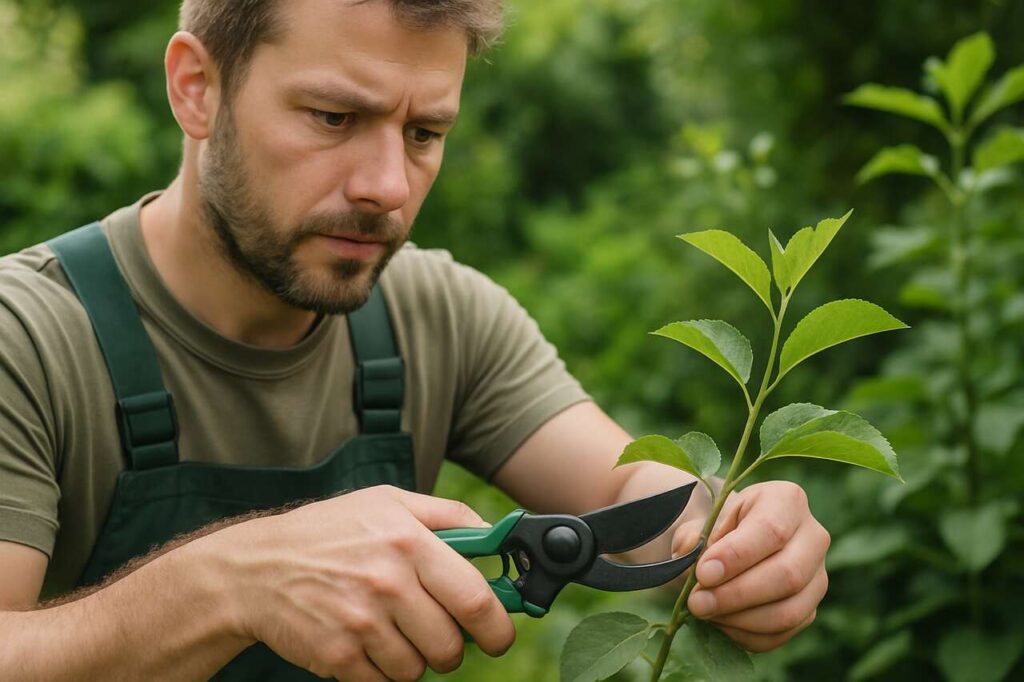
Gardeners often focus on the timing and tools of pruning, yet overlook a fundamental aspect that can make the difference between healthy plants and disease-prone specimens. The angle at which cuts are made during pruning plays a critical role in preventing water accumulation on wound surfaces, a primary gateway for fungal infections and bacterial diseases. By adopting the pruning-angle method, which involves cutting at a precise 30 to 45-degree angle approximately 5 to 7 millimetres above an outward-facing bud, gardeners can significantly reduce the risk of rot and promote vigorous plant growth. This technique, applicable to roses, raspberries, and numerous ornamental species, works in harmony with plants’ natural healing processes whilst protecting vulnerable tissue from moisture-related damage.
Why does standing water promote disease ?
The relationship between moisture and pathogen development
Standing water on pruning cuts creates an ideal environment for fungal spores and bacterial pathogens to germinate and penetrate plant tissue. When water pools on a flat or poorly angled cut surface, it remains in contact with the wound for extended periods, softening the protective barriers that plants naturally form during healing. This prolonged moisture exposure allows disease-causing organisms to establish themselves before the plant can seal the wound effectively.
Common diseases linked to water accumulation
Several destructive plant diseases thrive in the conditions created by standing water on pruning wounds:
- Botrytis cinerea, or grey mould, which rapidly colonises wet tissue and spreads to healthy parts of the plant
- Canker diseases that cause sunken, dead areas on stems and branches
- Crown rot, particularly problematic in roses and fruit-bearing shrubs
- Bacterial infections that enter through waterlogged wounds and cause wilting or dieback
The delicate tissue at the base of buds proves especially vulnerable to these pathogens when exposed to persistent moisture. Understanding these risks underscores the importance of mastering proper cutting techniques.
The step-by-step pruning angle method
Identifying the correct bud position
Before making any cut, locate an outward-facing bud on the stem or branch you intend to prune. This bud should point away from the centre of the plant to encourage open growth patterns that improve air circulation. The bud’s direction determines the future growth trajectory, making this initial assessment crucial for both plant health and aesthetic appeal.
Executing the angled cut
Position your secateurs or pruning shears so the blade will create a cut at a 30 to 45-degree angle. The highest point of the cut should sit approximately 5 to 7 millimetres above the bud, whilst the lowest point aligns roughly level with the bud’s base. This configuration allows rainwater to run off naturally without pooling on the wound surface or dripping onto the bud itself.
| Cut element | Specification | Purpose |
|---|---|---|
| Angle | 30 to 45 degrees | Ensures water drainage |
| Distance above bud | 5 to 7 millimetres | Protects bud whilst preventing die-back |
| Bud orientation | Outward-facing | Promotes open growth structure |
Verifying cut quality
After making the cut, inspect the wound surface to ensure it appears clean and smooth rather than crushed or torn. The angled surface should clearly slope away from the bud, creating a natural drainage path. Any ragged edges or compressed tissue should be corrected with a fresh cut, as damaged tissue heals poorly and invites infection.
With the fundamental technique established, different plant types require specific adaptations to maximise effectiveness.
Pruning angles according to plant type
Roses and flowering shrubs
Roses benefit particularly from the 45-degree angle approach, as their susceptibility to fungal diseases makes water management critical. For hybrid tea roses and floribundas, cuts should be made during late winter or early spring, after the final frost period. The angled cut prevents water from settling on the wound whilst the plant channels energy into new flowering shoots from the remaining buds.
Fruit-bearing canes and brambles
Raspberries, blackberries, and similar cane fruits require slightly modified angles depending on cane thickness:
- Thin canes benefit from a sharper 30-degree angle to prevent splitting
- Thicker canes can accommodate the standard 45-degree cut
- Summer-fruiting varieties should be pruned immediately after harvest
- Autumn-fruiting types respond best to late winter pruning
Ornamental deciduous plants
Ornamental shrubs and trees with visible buds, such as magnolias and hydrangeas, follow similar principles but may require adjustments based on branch diameter. Larger branches exceeding 2 centimetres in diameter benefit from a three-cut method that incorporates the angled final cut after removing most of the branch weight, preventing bark tearing that could compromise the drainage angle.
Achieving the correct angle depends not only on technique but also on the condition of the tools employed.
The importance of clean cuts and tools
Sharp blades and cutting precision
Blunt secateurs crush plant tissue rather than slicing cleanly through it, creating irregular wound surfaces that retain water regardless of the intended angle. Sharp blades produce smooth cuts that heal rapidly and shed moisture efficiently. Professional-grade bypass secateurs should be sharpened at least once per season, whilst anvil-style pruners require more frequent maintenance to prevent tissue compression.
Disinfection protocols between plants
Disease transmission through contaminated tools poses a significant risk, particularly when moving between different plant specimens. A quick disinfection routine prevents pathogen spread:
- Wipe blades with a cloth soaked in 70% isopropyl alcohol between plants
- Use a diluted bleach solution (one part bleach to nine parts water) for more thorough cleaning
- Allow tools to air dry completely before storage to prevent rust
- Clean and oil tools at the end of each gardening session
Tool selection for different pruning tasks
Matching the tool to the branch size ensures clean cuts at the proper angle. Hand secateurs work effectively for stems up to 2 centimetres in diameter, whilst loppers handle branches up to 4 centimetres. Pruning saws become necessary for larger limbs, where maintaining the correct angle requires steady, controlled strokes rather than forcing the cut.
Beyond general techniques, specific plants demand tailored approaches that account for their unique growth patterns.
Plant-specific pruning techniques
Responding to hormonal distribution patterns
Pruning influences how plants distribute growth hormones, particularly auxins that regulate shoot development. When the terminal bud is removed through angled cutting, dormant buds below the cut receive increased hormonal signals, often resulting in multiple new shoots. Understanding this response allows gardeners to shape plants strategically whilst maintaining the water-shedding benefits of angled cuts.
Seasonal timing for optimal healing
The plant’s physiological state during pruning significantly affects wound healing and disease resistance:
| Season | Plant response | Best applications |
|---|---|---|
| Winter (dormancy) | Vigorous spring growth | Structural pruning, rejuvenation |
| Spring (active growth) | Rapid wound sealing | Light shaping, deadheading |
| Summer (peak growth) | Growth reduction | Controlling size, fruit thinning |
| Autumn (slowing growth) | Minimal response | Generally avoided except for specific species |
Working with natural healing mechanisms
Plants seal wounds by forming callus tissue that gradually covers the cut surface. Angled cuts that shed water support this process by keeping the wound dry whilst new cells develop. Applying wound sealants generally proves unnecessary and may actually impede natural healing, as modern horticultural research demonstrates that properly angled, clean cuts heal most effectively when left exposed to air.
Even experienced gardeners occasionally make errors that compromise the benefits of proper pruning angles.
Common pruning mistakes and how to avoid them
Cutting too close or too far from the bud
Cuts made flush with the bud remove protective tissue and often damage the bud itself, whilst cuts positioned more than 1 centimetre above the bud leave a stub of dead wood that invites disease. This stub cannot heal properly and often dies back to the bud anyway, creating an entry point for pathogens. Maintaining the 5 to 7-millimetre distance provides optimal protection whilst allowing proper healing.
Creating flat or reverse-angle cuts
Horizontal cuts accumulate water directly on the wound surface, whilst reverse-angle cuts (sloping towards the bud) direct water onto the vulnerable bud tissue. Both errors significantly increase disease risk and should be corrected immediately upon recognition. Taking an extra moment to verify the cut angle before proceeding prevents these common mistakes.
Pruning during inappropriate weather conditions
Conducting pruning operations during wet weather or when rain is forecast negates the water-shedding benefits of angled cuts. The following conditions warrant postponing pruning activities:
- Active rainfall or immediately afterwards, when plants remain wet
- High humidity periods that slow wound drying
- Freezing temperatures that can damage freshly cut tissue
- Extreme heat that stresses plants and impairs healing responses
The pruning-angle method represents a straightforward yet scientifically grounded approach to plant care that yields substantial benefits. By cutting at 30 to 45 degrees above outward-facing buds, gardeners create natural drainage pathways that prevent the moisture accumulation responsible for numerous plant diseases. This technique, combined with sharp, disinfected tools and appropriate seasonal timing, works synergistically with plants’ inherent healing mechanisms to maintain vigour and aesthetic appeal. Whether tending roses, fruit canes, or ornamental shrubs, mastering these angled cuts protects garden investments whilst promoting healthy growth patterns. The small additional attention required to achieve proper cutting angles delivers disproportionate returns in plant health, demonstrating that sometimes the most effective horticultural practices are also the simplest to implement.