



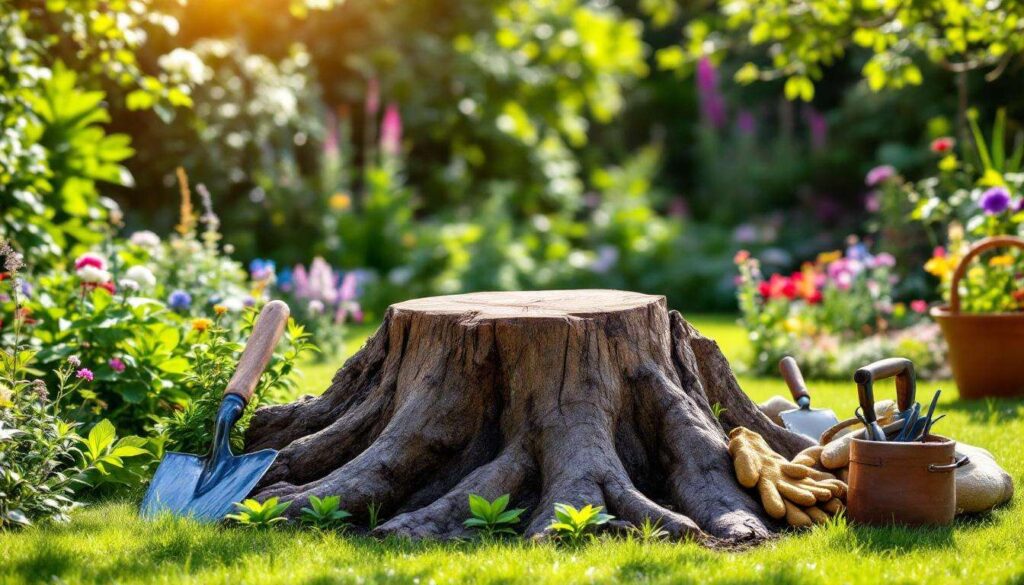
Removing an old tree stump from your garden might seem like an overwhelming task, but with the right approach and proper preparation, it becomes entirely manageable. Whether the stump is a remnant of storm damage, disease, or simply a tree that has outlived its purpose, addressing it promptly can prevent numerous problems whilst opening up valuable space for new landscaping projects. Understanding the various methods available, the tools required, and the safety measures necessary will ensure the job is completed efficiently and without incident.
Why remove a tree stump ?
Aesthetic and practical concerns
An old tree stump can significantly detract from the overall appearance of your garden. Visual appeal matters greatly when maintaining outdoor spaces, and a decaying stump creates an eyesore that disrupts the harmony of carefully planned landscaping. Beyond aesthetics, stumps present practical obstacles that interfere with mowing, gardening, and other routine maintenance activities.
Safety hazards and pest infestations
Leaving a stump in place poses several risks that homeowners should consider:
- Tripping hazards for children, elderly family members, and visitors
- Potential damage to lawn equipment when mowing or maintaining the area
- Attraction of wood-boring insects such as beetles and termites
- Fungal growth that can spread to healthy plants and trees
- Root systems that continue to sprout new growth, requiring repeated cutting
Pest infestations represent a particularly concerning issue. Decaying wood provides an ideal habitat for termites and carpenter ants, which can eventually migrate towards your home’s structure. Additionally, fungi and diseases that develop in rotting stumps may spread to surrounding vegetation, compromising the health of your entire garden.
Space optimisation and new planting opportunities
Removing a stump liberates valuable garden space that can be repurposed for numerous projects. Whether you wish to install a patio, create a vegetable patch, plant new ornamental features, or simply expand your lawn, eliminating the stump provides a blank canvas for reimagining your outdoor environment. The root system of an old stump can also compete with nearby plants for nutrients and water, so removal benefits the overall health of your garden ecosystem.
Understanding these compelling reasons for stump removal naturally leads to exploring the various techniques available for tackling this project.
Methods for uprooting a stump
Manual excavation technique
The traditional approach involves manual digging around the stump to expose the root system. This method requires patience and considerable physical effort but remains the most economical option for homeowners willing to invest time rather than money. Begin by digging a trench approximately 30 centimetres wide around the stump’s perimeter, gradually working deeper to expose major roots. Use a pruning saw or axe to sever these roots systematically, working your way around the entire stump. Once all significant roots are cut, attempt to rock the stump back and forth to loosen it from the soil. For particularly stubborn stumps, leverage tools such as a pry bar can provide additional mechanical advantage.
Chemical decomposition process
Chemical stump removers offer a less labour-intensive alternative that accelerates natural decomposition. These products typically contain potassium nitrate, which softens the wood fibres and makes the stump porous. The application process involves:
- Drilling multiple holes into the top and sides of the stump
- Filling these holes with the chemical remover according to manufacturer specifications
- Adding water to activate the decomposition process
- Covering the stump with a tarpaulin to retain moisture
- Waiting several weeks to months for the wood to become spongy
- Breaking apart the softened stump with an axe or removing it entirely
This method requires minimal physical exertion but demands patience, as the decomposition timeline varies depending on stump size, wood density, and environmental conditions.
Mechanical grinding solution
For rapid and effective removal, a stump grinder represents the professional standard. This specialised machine uses a rotating cutting disc with carbide teeth to chip away the stump and root system. Grinders can reduce a stump to wood chips and sawdust within hours, grinding down to approximately 15-20 centimetres below ground level. The resulting cavity can be filled with soil and reseeded immediately. Professional operators typically charge based on stump diameter, but the speed and thoroughness justify the expense for many homeowners. An additional benefit is that the wood chips produced make excellent mulch for garden beds.
Natural decomposition approach
The most environmentally gentle option involves allowing nature to take its course. Whilst this process can extend over many years, it requires no intervention and actually enriches the surrounding soil as the wood breaks down. To accelerate natural decomposition, drill holes in the stump and fill them with compost or nitrogen-rich fertiliser. Keep the stump moist and cover it with soil and mulch. Fungi and bacteria will gradually break down the wood, returning nutrients to the ecosystem.
Selecting the appropriate method depends largely on having access to the correct equipment and understanding how to use it safely.
Tools needed to remove a tree stump
Essential manual tools
For those attempting manual removal, assembling the proper toolkit is crucial for success. Basic equipment includes a round-point shovel for digging, a mattock for breaking compacted soil, and a pruning saw or bow saw for cutting roots. A sturdy axe proves invaluable for severing thicker roots, whilst a pry bar or digging bar provides leverage when attempting to lift the stump. Loppers handle smaller roots efficiently, and a pickaxe helps break through rocky or clay-heavy soil.
Power equipment options
Power tools significantly reduce the physical demands of stump removal. A chainsaw can cut surface roots and reduce the stump height before excavation begins, though extreme caution is necessary when cutting near ground level where dirt and stones can damage the chain. For chemical methods, a power drill with a large-diameter wood bit creates the necessary holes quickly and uniformly. Stump grinders, whether hired or operated by professionals, represent the most powerful option, with models ranging from small walk-behind units suitable for stumps up to 30 centimetres in diameter to large self-propelled machines capable of handling massive stumps.
Supplementary materials and supplies
| Item | Purpose | Quantity needed |
|---|---|---|
| Chemical stump remover | Accelerate decomposition | As per product instructions |
| Tarpaulin | Cover treated stump | One large sheet |
| Topsoil | Fill cavity after removal | Approximately twice stump volume |
| Grass seed or turf | Restore lawn area | Sufficient for affected area |
Having the right tools assembled beforehand streamlines the removal process, but equally important is understanding how to use them without risking injury.
Safety and precautions to take before starting
Personal protective equipment requirements
Stump removal involves numerous hazards that necessitate comprehensive protective gear. Heavy-duty work gloves protect hands from splinters, blisters, and cuts when handling tools and wood. Safety goggles or a full face shield guard against flying wood chips, particularly when using power equipment or striking with an axe. Steel-capped boots with good ankle support prevent foot injuries from dropped tools or rolling stumps and provide stability on uneven ground. Long trousers and long-sleeved shirts offer protection from scratches and insect bites, whilst hearing protection becomes essential when operating loud machinery such as chainsaws or grinders.
Site assessment and preparation
Before commencing work, thoroughly examine the area surrounding the stump. Identify and mark the locations of:
- Underground utility lines including water, gas, electricity, and telecommunications
- Irrigation systems and drainage pipes
- Property boundaries to ensure you are working within your own land
- Nearby structures that could be damaged by falling debris
- Overhead power lines that might interfere with equipment operation
Contact your local utility companies to have underground services marked before digging. This free service prevents potentially catastrophic accidents and costly damage to essential infrastructure.
Chemical handling and environmental considerations
When using chemical stump removers, read all product labels carefully and follow instructions precisely. Store chemicals in their original containers, away from children and pets. Wear appropriate protective equipment during application and avoid contact with skin and eyes. Be mindful of environmental impact, ensuring chemicals do not contaminate water sources or harm beneficial organisms in your garden. Never use accelerants such as petrol or diesel to burn stumps, as this creates serious fire hazards and releases toxic fumes.
Physical fitness and assistance
Manual stump removal is physically demanding work that can strain muscles, joints, and the cardiovascular system. Assess your fitness level honestly before attempting this task. Take regular breaks, stay hydrated, and use proper lifting techniques to avoid back injuries. For larger stumps or if you have any health concerns, enlist assistance from family members or consider hiring professionals. Keep a well-stocked first aid kit readily accessible and ensure someone knows you are undertaking this work in case of emergency.
Once the stump has been successfully removed using safe practices, addressing the resulting debris becomes the next priority.
How to dispose of green waste after removal
Municipal collection services
Many local councils offer green waste collection programmes that accept tree stumps and associated debris. Check your council’s specific guidelines regarding size restrictions, as most services require stumps to be cut into manageable pieces, typically no larger than 30 centimetres in diameter and 60 centimetres in length. Some authorities provide dedicated collection days for bulky garden waste, whilst others require booking a special pickup. Bundle smaller branches and roots securely and place them at the kerbside according to your council’s schedule.
Household waste recycling centres
Recycling centres accept substantial quantities of wood waste and often process it into useful products such as mulch, compost, or biomass fuel. Transport your stump and debris to the nearest facility, ensuring your vehicle can safely handle the weight. Most centres separate untreated wood from treated timber, so inform staff if the stump has been chemically treated. This option provides immediate disposal and supports environmental sustainability through material recycling.
On-site processing options
For homeowners with adequate space and equipment, processing waste on-site offers several advantages:
- Chipping wood into mulch for garden beds and pathways
- Creating a dedicated compost pile for long-term decomposition
- Cutting larger pieces into firewood for outdoor fire pits or wood burners
- Building habitat piles that provide shelter for beneficial wildlife
- Using wood chips as a natural weed suppressant around trees and shrubs
A garden shredder or chipper transforms branches and smaller root sections into valuable mulch that conserves soil moisture, regulates temperature, and gradually enriches the soil as it decomposes.
Professional waste removal services
For particularly large stumps or when time constraints prevent self-disposal, professional waste removal companies offer convenient solutions. These services collect and dispose of green waste responsibly, often at competitive rates. Some tree surgery companies include waste removal as part of their stump grinding service, providing a comprehensive solution that eliminates all debris from your property.
Rather than viewing the stump solely as waste requiring disposal, creative homeowners might explore ways to integrate it into their garden design.
Eco-friendly alternatives for reusing a tree stump
Natural garden features and planters
Transforming a stump into a living planter creates a unique focal point whilst avoiding removal altogether. Hollow out the centre of the stump using a drill and chisel, creating a cavity approximately 15-20 centimetres deep. Fill this space with quality potting soil and plant colourful annuals, trailing plants, or even small shrubs. Succulents work particularly well in stump planters, requiring minimal maintenance whilst providing year-round interest. For larger stumps, multiple planting pockets can be created at different heights, producing a tiered garden effect.
Functional outdoor furniture
With minimal modification, stumps become rustic outdoor furniture that blends seamlessly with natural garden settings. A flat-topped stump serves as an excellent occasional table for outdoor entertaining, whilst taller specimens can be converted into stools or plant stands. Sand the top surface smooth and apply a weatherproof sealant to protect against moisture and extend longevity. For added stability, sink the stump slightly into the ground or attach a wooden base.
Wildlife habitat creation
Leaving a stump in place provides valuable ecological benefits by supporting local wildlife populations. Decaying wood hosts numerous insects that serve as food sources for birds, whilst cavities and crevices offer nesting sites and shelter. Enhance the stump’s wildlife value by:
- Drilling holes of varying sizes to accommodate different insect species
- Placing the stump in a quiet corner away from high-traffic areas
- Surrounding it with native plants that provide additional food and cover
- Adding a shallow water dish on top for birds and beneficial insects
- Allowing moss and lichens to colonise naturally
Artistic and sculptural elements
Creative individuals can transform stumps into garden art through carving, painting, or embellishment. Simple designs such as toadstools, owls, or abstract patterns add whimsy to garden spaces. More ambitious projects might involve chainsaw carving to create detailed sculptures. Even without artistic skills, stumps can be decorated with mosaic tiles, embedded with coloured glass, or wrapped with climbing plants to create living sculptures that evolve throughout the seasons.
These creative alternatives demonstrate that stumps need not always be removed, offering sustainable options that enhance rather than detract from garden aesthetics.
Addressing an old tree stump requires careful consideration of multiple factors including the chosen removal method, available tools, safety protocols, and waste disposal options. Whether opting for manual excavation, chemical decomposition, mechanical grinding, or natural decay, each approach offers distinct advantages suited to different circumstances and budgets. Prioritising safety through proper protective equipment and site preparation prevents accidents and ensures successful completion. For those seeking alternatives to removal, creative reuse transforms potential eyesores into functional or decorative garden features whilst supporting local ecosystems. By weighing these various options against your specific situation, you can select the most appropriate solution that balances effectiveness, cost, and environmental responsibility.