

Keeping houseplants and garden flora hydrated during holidays or busy periods can prove challenging for even the most dedicated gardeners. Watering gel offers an ingenious solution to this common problem, acting as a moisture reservoir that gradually releases water to plant roots over extended periods. Creating your own DIY watering gel not only saves money compared to commercial alternatives but also allows complete control over ingredients, ensuring your plants receive exactly what they need without unnecessary chemicals or additives.
Understanding the importance of homemade watering gel
The science behind water retention in gel form
Hydrogel polymers form the basis of watering gel technology, absorbing water molecules and expanding to many times their original size. These superabsorbent materials create a slow-release moisture system that prevents both overwatering and drought stress. When incorporated into soil or placed near plant roots, the gel gradually releases stored water as the surrounding medium dries out, maintaining consistent moisture levels that promote healthy root development and vigorous growth.
Why homemade solutions outperform shop-bought alternatives
Commercial watering gels often contain synthetic chemicals and preservatives that may accumulate in soil over time. Homemade versions provide several distinct advantages:
- Complete transparency regarding ingredients and their sources
- Customisation options to suit specific plant requirements
- Significant cost savings, particularly for large-scale applications
- Reduced packaging waste and environmental impact
- Fresh preparation ensures maximum effectiveness
Understanding these fundamental principles helps gardeners appreciate how this simple solution addresses multiple plant care challenges simultaneously, setting the stage for practical application.
Necessary ingredients to make your watering gel
Primary components for the basic recipe
Creating effective DIY watering gel requires surprisingly few ingredients. The essential base consists of unflavoured gelatine powder, which provides the gelling agent that traps and slowly releases moisture. You will need approximately 30 grams of gelatine powder per litre of water for optimal consistency.
| Ingredient | Quantity | Purpose |
|---|---|---|
| Unflavoured gelatine powder | 30g per litre | Gelling agent and water retention |
| Distilled or filtered water | 1 litre | Primary moisture source |
| Glycerine (optional) | 10ml per litre | Enhanced moisture retention |
Optional additives for enhanced performance
Supplementary ingredients can boost the gel’s effectiveness and provide additional plant benefits. Consider incorporating liquid seaweed extract for trace minerals, or diluted compost tea for beneficial microorganisms. A small amount of glycerine improves moisture retention capacity, whilst a few drops of tea tree oil can provide mild antifungal properties without harming plant roots.
With these straightforward ingredients assembled, the actual preparation process becomes remarkably simple and quick.
Step-by-step instructions to create your own gel
Preparation and mixing process
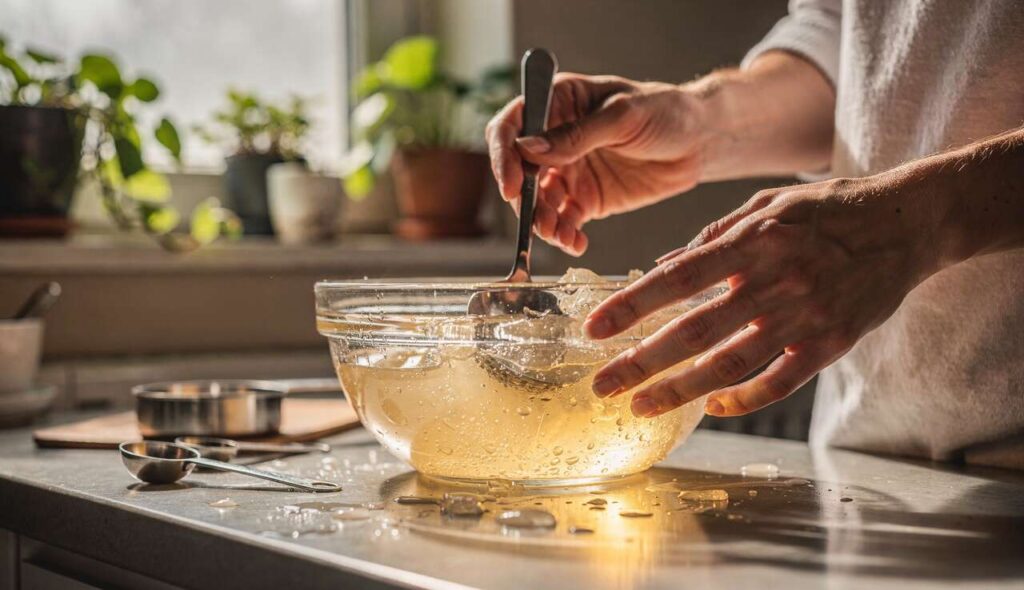
Begin by heating half the water in a saucepan until it reaches approximately 80 degrees Celsius, just below boiling point. Remove from heat and gradually sprinkle the gelatine powder whilst stirring continuously to prevent clumping. Thorough dissolution is crucial for achieving uniform consistency throughout the final product.
Once the gelatine has completely dissolved, add the remaining cold water and any optional additives. Stir the mixture gently but thoroughly, ensuring all components are evenly distributed. The temperature will naturally decrease to a safe handling level during this process.
Setting and storage procedures
Pour the prepared gel into clean containers with airtight lids, filling them approximately three-quarters full to allow for slight expansion during setting. Place containers in a refrigerator for 2-4 hours until the gel achieves a firm, jelly-like consistency.
- Store finished gel in refrigerator for up to two weeks
- Label containers with preparation date for reference
- Keep away from direct sunlight to prevent premature degradation
- Check consistency before each use
Once your gel has properly set, applying it correctly ensures maximum benefit for your plants.
Tips for effectively using watering gel on your plants
Application methods for different plant types
For potted plants, create small pockets in the soil approximately 5-7 centimetres deep around the plant’s drip line, then insert marble-sized portions of gel. Container plants benefit from gel placement near drainage holes, where it can capture excess water and redistribute it during dry periods. Garden beds require larger quantities distributed evenly throughout the planting area before adding soil and plants.
Determining appropriate quantities
Application rates vary according to plant size, pot volume, and environmental conditions:
| Container Size | Gel Quantity | Frequency |
|---|---|---|
| Small pots (10-15cm) | 2-3 tablespoons | Every 2 weeks |
| Medium pots (20-30cm) | 4-6 tablespoons | Every 2 weeks |
| Large pots (40cm+) | 8-10 tablespoons | Every 2 weeks |
Monitoring and maintenance considerations
Regular observation remains essential even when using watering gel. Check soil moisture levels weekly by inserting a finger 3-5 centimetres deep. The gel should supplement, not replace, normal watering routines. During particularly hot weather, plants may require additional water despite gel presence. Refresh the gel every fortnight during growing season for optimal results.
Beyond practical benefits, this homemade solution offers significant environmental advantages worth exploring.
The ecological benefits of using a DIY watering gel
Reducing water consumption and waste
Water conservation represents one of the most compelling reasons to adopt watering gel technology. By releasing moisture gradually and preventing runoff, the gel can reduce overall water usage by 30-50% compared to traditional watering methods. This efficiency gain proves particularly valuable in drought-prone regions or during water restrictions, allowing gardeners to maintain healthy plants whilst respecting environmental limitations.
Minimising plastic and packaging waste
Commercial watering products typically arrive in single-use plastic containers that contribute to landfill accumulation. Homemade alternatives eliminate this packaging waste entirely, utilising reusable containers and bulk ingredients. The environmental impact extends beyond immediate waste reduction, as fewer manufacturing processes and reduced transportation requirements lower the overall carbon footprint associated with plant care.
- Biodegradable gelatine breaks down naturally in soil
- No synthetic polymers entering the ecosystem
- Reduced frequency of watering decreases energy consumption
- Local ingredient sourcing minimises transport emissions
These environmental credentials can be further enhanced through thoughtful customisation of your gel formula.
Customisation suggestions for a unique watering gel
Incorporating nutrients and supplements
Enriched watering gel delivers both moisture and nutrition simultaneously, streamlining plant care routines. Mix diluted liquid fertiliser into the water before adding gelatine, ensuring concentration remains below half the manufacturer’s recommended strength to prevent root burn. Organic options such as worm casting tea or fish emulsion provide gentle, slow-release nutrients that complement the gel’s gradual moisture delivery.
Adjusting consistency for specific applications
Different growing situations benefit from varied gel textures. Increase gelatine concentration to 40 grams per litre for firmer gel suited to outdoor applications where it must withstand weather exposure. Conversely, reduce to 20 grams per litre for softer gel that integrates more readily into fine-textured potting mixes used for seedlings and delicate plants.
Creating specialised formulations
Tailor your gel to address specific plant requirements:
- Add citric acid for acid-loving plants like azaleas and blueberries
- Incorporate cinnamon powder for natural antifungal protection
- Mix in activated charcoal to improve soil aeration
- Include aloe vera gel for additional moisture retention
- Blend essential oils like neem for pest deterrence
Experimentation allows gardeners to develop signature formulations perfectly matched to their unique growing conditions and plant collections.
Creating your own watering gel transforms plant care from a daily chore into a sustainable, efficient practice that benefits both flora and environment. This simple gelatine-based solution provides reliable moisture management whilst reducing water consumption, eliminating synthetic chemicals, and offering endless customisation possibilities. The straightforward preparation process requires minimal time and investment, yet delivers professional-level results that keep plants thriving even during extended absences. By adopting this DIY approach, gardeners gain greater control over their plant care routines whilst contributing to broader environmental conservation efforts through reduced waste and resource consumption.