


Gardens across the country face a persistent challenge that consumes countless hours of labour: weeds that seem to regenerate no matter how often they’re pulled. Yet a surprisingly simple solution lies in materials most households discard without a second thought. Cardboard, when used as mulch, creates an effective barrier that suppresses unwanted growth whilst simultaneously enriching the soil beneath. This accessible technique has transformed how gardeners approach weed management, offering a practical alternative to chemical herbicides and exhausting manual removal.
Understanding the usefulness of cardboard mulch
The science behind weed suppression
Cardboard functions as a physical barrier that intercepts the most critical resource for plant growth: sunlight. When placed over soil, it prevents light from reaching weed seeds and existing plants below, effectively halting photosynthesis. Without this essential process, weeds cannot generate the energy required for growth and eventually perish beneath the protective layer.
The material’s structure allows it to maintain this barrier whilst still permitting essential elements to pass through. Water penetrates the fibres, ensuring that beneficial plants and soil organisms receive adequate moisture. Similarly, air circulation continues, preventing the anaerobic conditions that would damage soil health. This selective permeability makes cardboard superior to plastic sheeting, which creates impermeable barriers detrimental to soil ecosystems.
How cardboard transforms into soil enrichment
Unlike synthetic materials, cardboard undergoes natural decomposition that actively benefits the garden. The cellulose fibres break down over several months, contributing organic matter to the soil profile. This gradual process attracts earthworms and other decomposers that consume the softening cardboard whilst aerating the soil through their tunnelling activities.
As decomposition progresses, the cardboard releases carbon into the soil, improving its structure and nutrient-holding capacity. This transformation means the mulch serves a dual purpose: initially suppressing weeds, then enriching the very ground it protects. The timeline varies depending on climate and moisture levels, but most cardboard fully integrates within six to twelve months.
Understanding these fundamental mechanisms reveals why this approach has gained traction amongst both amateur gardeners and horticultural professionals seeking sustainable practices.
The benefits of cardboard mulch
Economic advantages over conventional methods
The financial appeal of cardboard mulch stems from its zero-cost availability. Whilst commercial mulches, landscape fabrics, and herbicides represent recurring expenses, cardboard typically arrives free through packaging from deliveries and purchases. This accessibility makes effective weed control available regardless of gardening budget.
| Method | Initial Cost | Annual Replacement | Environmental Impact |
|---|---|---|---|
| Cardboard mulch | £0 | Not required | Very low |
| Landscape fabric | £50-150 | Every 3-5 years | Moderate |
| Wood chip mulch | £30-80 | Annually | Low |
| Chemical herbicide | £15-40 | Multiple applications | High |
Time savings through reduced maintenance
Traditional weeding demands regular attention throughout the growing season. A properly installed cardboard layer eliminates this repetitive task for extended periods. Gardeners report dramatic reductions in maintenance hours, with some areas remaining virtually weed-free for entire seasons.
The benefits compound over time as the method prevents weed seeds from establishing in the first place. This proactive approach proves far more efficient than reactive weeding, which often occurs after plants have already developed extensive root systems requiring significant effort to remove.
Supporting beneficial garden ecosystems
Beyond weed suppression, cardboard mulch creates habitat for organisms essential to soil health:
- Earthworms congregate beneath the moist, dark environment, processing organic matter and creating nutrient-rich castings
- Ground beetles and other beneficial insects find shelter in the layered structure
- Soil microorganisms proliferate as they consume the decomposing cellulose
- Fungal networks expand through the cardboard, facilitating nutrient exchange with plant roots
This biological activity transforms lifeless cardboard into a living system that actively improves growing conditions. The contrast with chemical approaches, which often harm beneficial organisms alongside target weeds, highlights the ecological sophistication of this simple technique.
These multiple advantages explain the method’s growing adoption, but success depends entirely on proper implementation.
How to correctly instal mulch
Preparing the ground surface
Effective cardboard mulching begins with appropriate site preparation. Remove any particularly vigorous perennial weeds by hand, as species with substantial root systems may penetrate cardboard if left established. Annual weeds and their seeds, however, can remain as the cardboard will suppress them effectively.
Water the area thoroughly before laying cardboard. Moist soil helps the material conform to ground contours whilst ensuring beneficial organisms can immediately begin processing the fibres. This initial saturation also activates decomposition processes that will eventually integrate the cardboard into the soil profile.
Layering technique for maximum effectiveness
Single cardboard sheets rarely provide adequate coverage. Overlapping multiple layers creates the density required to block persistent weeds. The recommended approach involves:
- Removing all tape, labels, and staples from cardboard sheets
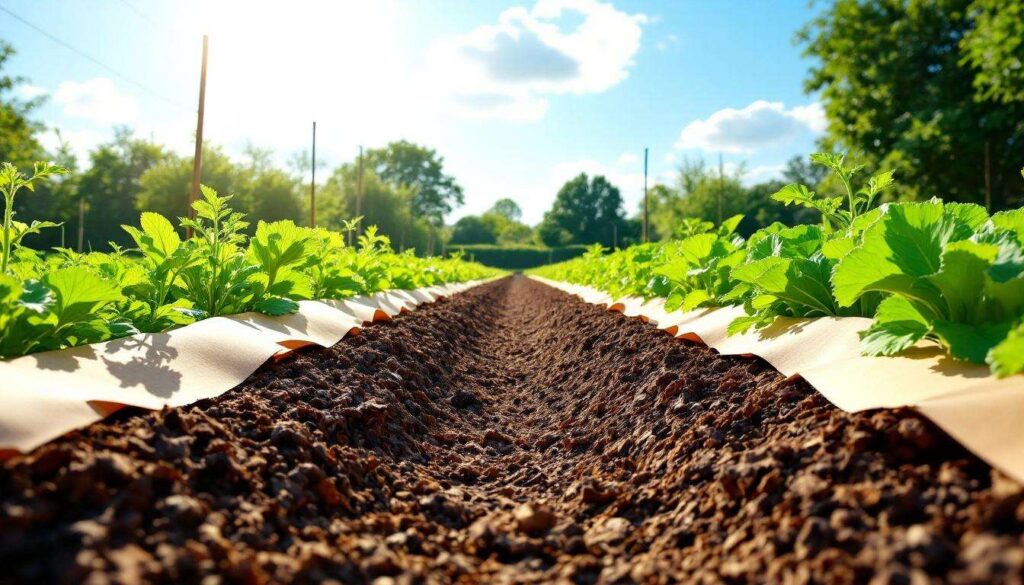
- Laying the first layer with pieces overlapping by at least 15 centimetres
- Adding a second layer with seams offset from the first
- Ensuring complete coverage without gaps where weeds might emerge
- Wetting each layer as it’s placed to promote adhesion and decomposition
Corrugated cardboard proves superior to thin packaging due to its structural integrity and greater thickness. The air pockets within corrugated material also provide enhanced insulation and moisture retention.
Top-dressing for aesthetics and function
Whilst cardboard alone functions effectively, covering it with decorative mulch offers practical benefits. A layer of wood chips, bark, or compost weighs down the cardboard, preventing wind displacement whilst improving visual appeal. This top layer also accelerates decomposition by maintaining consistent moisture levels and introducing additional microorganisms.
Apply this covering to a depth of 5-8 centimetres for optimal results. Thinner applications may expose cardboard edges, whilst excessive depth can create overly wet conditions that promote fungal issues in nearby plants.
Even with perfect installation, certain considerations ensure the method aligns with broader environmental responsibilities.
Environmental impact and sustainability
Waste reduction through material repurposing
Cardboard mulching directly addresses the substantial waste streams generated by packaging industries. Rather than consigning boxes to recycling facilities that require energy and water for processing, gardeners can repurpose materials locally with zero additional resource consumption. This closed-loop approach exemplifies practical sustainability accessible to individual households.
The environmental calculus becomes particularly favourable when compared to alternatives. Plastic landscape fabrics persist for decades without decomposing, eventually fragmenting into microplastics. Chemical herbicides introduce synthetic compounds into ecosystems with cascading effects on non-target species. Cardboard’s complete biodegradability eliminates these long-term environmental liabilities.
Carbon sequestration and soil building
As cardboard decomposes, it contributes to soil carbon stocks rather than releasing greenhouse gases. The cellulose fibres become incorporated into stable organic matter that improves soil structure for years. This process, though modest in scale, represents a positive contribution to carbon cycling when multiplied across numerous gardens.
The improved soil biology fostered by cardboard mulch creates additional environmental benefits:
- Enhanced water retention reduces irrigation requirements during dry periods
- Improved soil structure minimises erosion and nutrient runoff
- Increased biological activity supports pollinator habitat and biodiversity
- Reduced need for synthetic fertilisers as soil fertility improves naturally
Considerations for responsible sourcing
Not all cardboard proves equally suitable for garden use. Materials printed with heavy inks or coatings may introduce unwanted substances into soil. Prioritise plain brown cardboard or boxes with minimal printing. Avoid waxed cardboard, which resists decomposition and may contain compounds inappropriate for growing areas.
Similarly, ensure cardboard hasn’t been contaminated with substances unsuitable for gardens. Boxes that previously contained chemicals, oils, or other potentially harmful materials should be excluded regardless of their structural suitability.
These environmental advantages remain theoretical if implementation errors undermine the method’s effectiveness.
Avoiding common mistakes when using cardboard
Insufficient coverage and layering
The most frequent failure occurs when gardeners underestimate the persistence of weeds. A single cardboard layer with inadequate overlap allows determined plants to find gaps or push through weakened areas. This problem intensifies in areas with aggressive species like bindweed or couch grass, which possess the vigour to penetrate insufficient barriers.
Proper implementation requires patience and thoroughness. Rushing the installation process by using too few layers or leaving gaps inevitably results in weed breakthrough that negates the entire effort. The time invested in comprehensive initial coverage pays dividends through seasons of reduced maintenance.
Timing and seasonal considerations
Installing cardboard mulch during active growing seasons presents challenges. Established weeds may already possess sufficient energy reserves to push through before the cardboard fully suppresses them. Autumn installation proves ideal, as it allows the material to settle and begin decomposition over winter when weed pressure naturally diminishes.
Spring installation remains viable but requires more diligent preparation, including removal of existing vegetation. Summer applications face the greatest challenges, as heat-stressed cardboard may dry out before adequately suppressing vigorous warm-season weeds.
Moisture management errors
Cardboard requires consistent moisture to function optimally and decompose appropriately. Allowing it to dry completely creates a hydrophobic layer that sheds water rather than absorbing it, potentially creating drought stress for desired plants. Conversely, excessive saturation in poorly drained areas can create anaerobic conditions harmful to plant roots.
Monitor moisture levels particularly during establishment. The top mulch layer helps regulate this, but gardeners in very dry climates may need supplemental watering to maintain cardboard effectiveness. In consistently wet conditions, ensure adequate drainage exists before installation to prevent waterlogging issues.
Neglecting plant spacing requirements
When using cardboard around existing plants, maintain appropriate clearance from stems and trunks. Direct contact can trap moisture against plant tissue, promoting fungal diseases and rot. Leave a gap of 8-10 centimetres around woody plants and 5 centimetres around herbaceous perennials.
For new plantings through cardboard mulch, cut appropriately sized holes rather than attempting to plant through intact layers. Ensure these openings provide adequate root space whilst maintaining the weed-suppressing barrier in surrounding areas.
Cardboard mulch represents a convergence of practicality, economy, and environmental responsibility that few gardening techniques achieve. By transforming waste materials into effective weed barriers that simultaneously enrich soil, this method addresses multiple challenges through a single intervention. The substantial time savings, elimination of chemical inputs, and support for beneficial soil ecosystems make it particularly relevant for gardeners seeking sustainable approaches. Success requires attention to proper layering, adequate coverage, and appropriate moisture management, but these modest requirements yield disproportionate benefits. Whether preparing new beds, renovating neglected areas, or maintaining established gardens, cardboard mulch offers an accessible solution that improves with each season as decomposition progresses and soil health advances.